Engineering Services
Plumbing Engineering
Complete plumbing system design including domestic water supply, sanitary drainage, hot water generation, water quality management, and rigorous code compliance.
Domestic Water Supply Systems
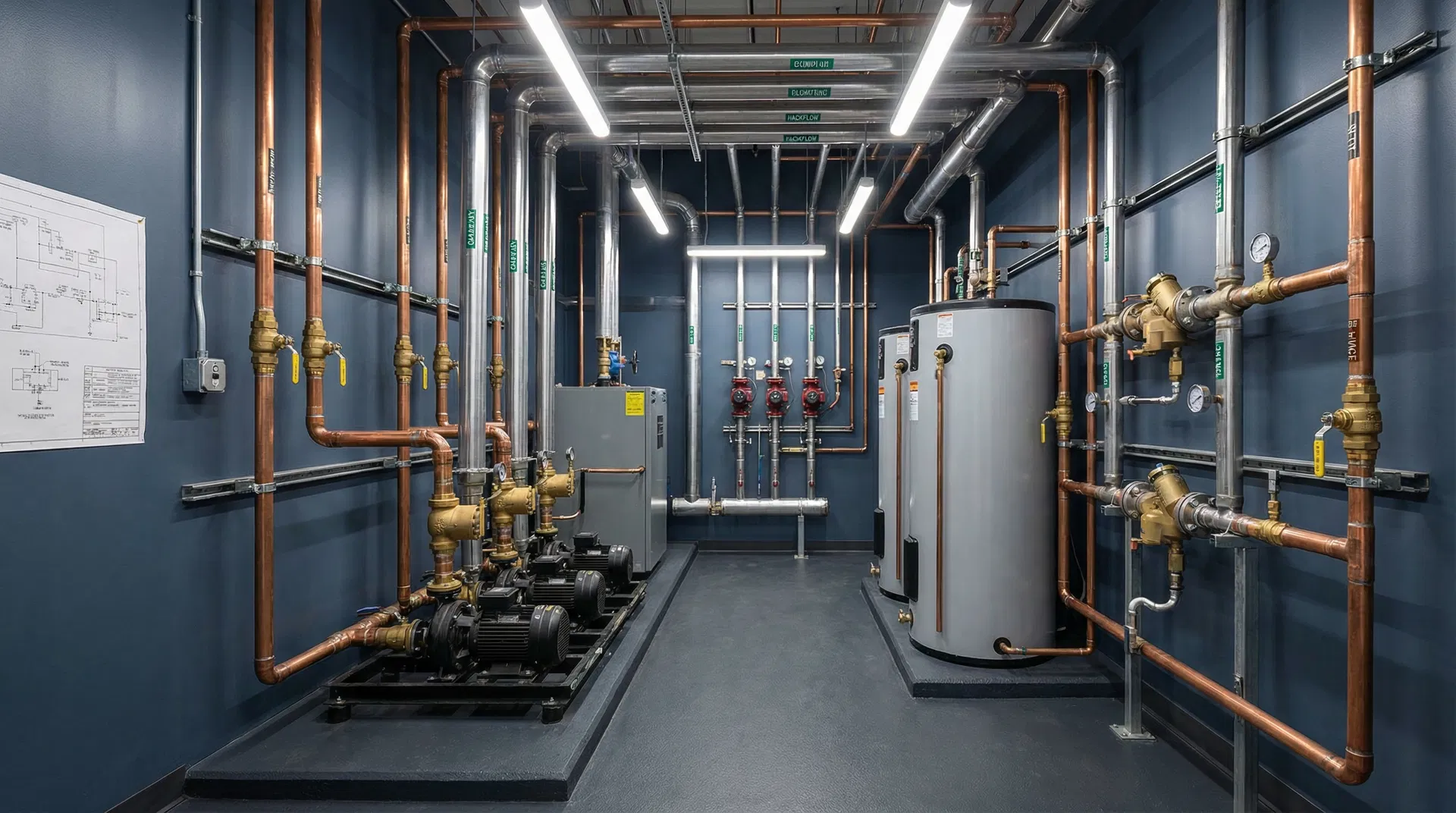
The domestic water supply system is one of the most critical building infrastructure components, and at EBS Engineering PC, we design these systems to deliver safe, reliable, and adequately pressured water to every fixture and appliance in the building. Our plumbing engineers have extensive experience designing domestic water systems for projects ranging from single-family residences to large-scale multi-story residential complexes, commercial buildings, healthcare facilities, and industrial plants.
Our domestic water design process begins with a thorough analysis of the building's water demand. We calculate fixture unit counts based on the type and number of plumbing fixtures, then apply the appropriate demand factors from the International Plumbing Code (IPC) or Uniform Plumbing Code (UPC) to determine peak flow rates. For buildings with specialized water demands — such as commercial kitchens, laundry facilities, cooling tower makeup, or irrigation systems — we perform detailed supplemental calculations to ensure the water service is adequately sized.
We design complete cold water and hot water distribution piping systems, specifying pipe materials (copper, CPVC, PEX, or stainless steel), sizes, insulation requirements, and support methods appropriate for each application. Our designs include pressure-reducing valves, backflow prevention assemblies, isolation valves, water meters, and other appurtenances needed for safe and code-compliant operation. For multi-story buildings where municipal water pressure is insufficient to serve upper floors, we design domestic water booster pump systems with variable-speed drives, pressure tanks, and redundant pump configurations to ensure reliable water delivery at all times.
Water conservation is a priority in all our designs. We specify low-flow fixtures and fittings that meet or exceed the requirements of the EPA WaterSense program, and we design systems that minimize water waste through proper pipe sizing, recirculation system design, and the elimination of dead legs. For projects pursuing LEED or other green building certifications, we provide the water use calculations and documentation needed to earn water efficiency credits.
Sanitary & Storm Drainage Systems
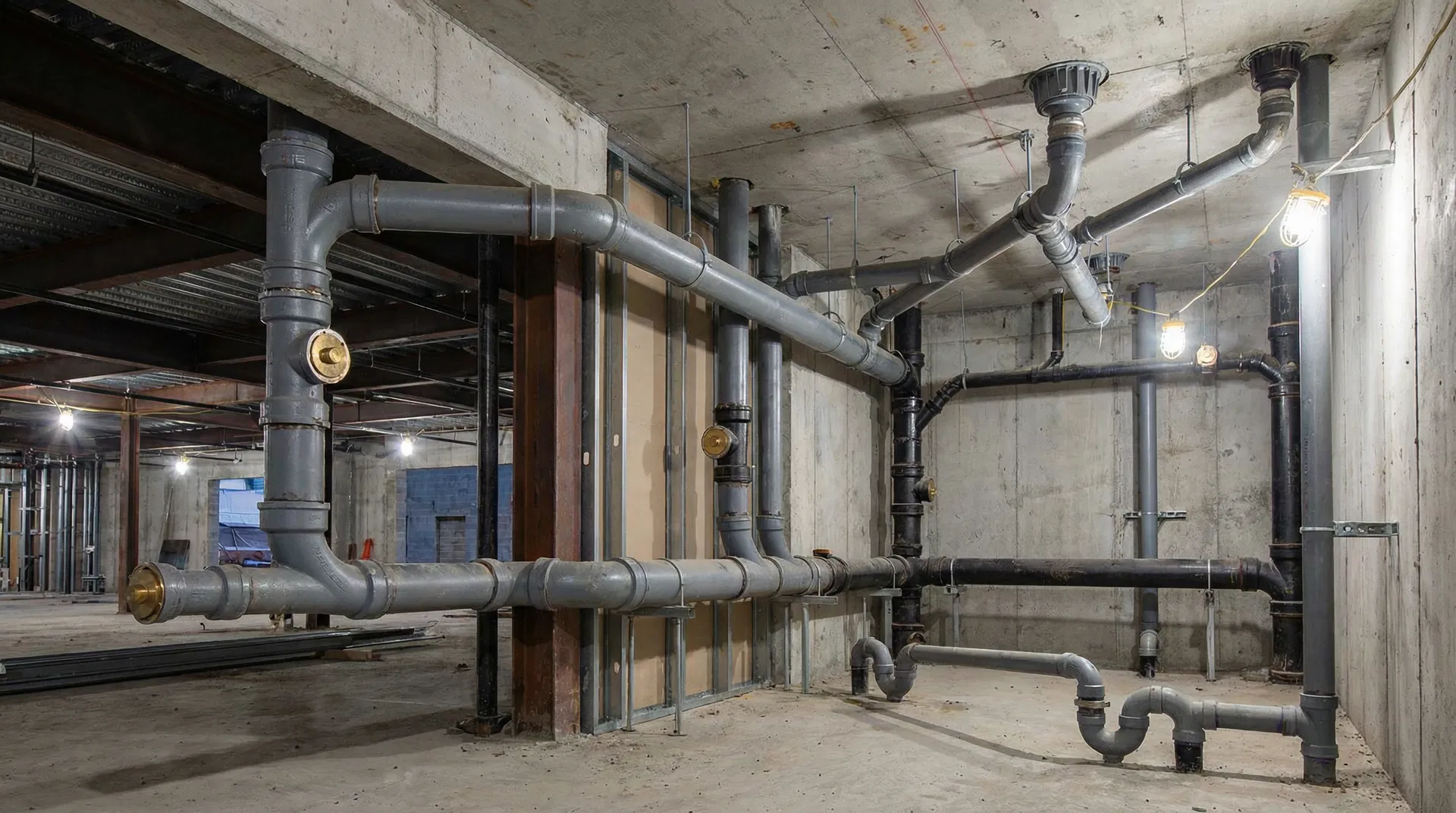
Effective drainage systems are essential for building sanitation, occupant health, and protection of the building structure. EBS Engineering PC designs complete sanitary waste and vent piping systems that efficiently convey wastewater from fixtures to the building sewer connection while maintaining proper trap seals and preventing the buildup of sewer gases within the building.
Our sanitary drainage designs include properly sized waste piping, vent piping, and cleanouts in accordance with the applicable plumbing code. We design both conventional gravity drainage systems and, where required by building conditions, engineered drainage solutions such as sewage ejector systems for below-grade fixtures, grease interceptors for commercial kitchen waste, acid waste and vent systems for laboratory facilities, and oil/water separators for parking garages and maintenance areas.
Storm drainage design is equally important for protecting buildings from water intrusion and managing stormwater runoff. We design roof drainage systems including primary roof drains, secondary (overflow) drains, and scupper overflow provisions sized in accordance with the plumbing code and coordinated with the structural engineer's roof loading criteria. Our storm drainage designs include interior storm piping, area drains, trench drains, and connections to the site storm sewer system. For projects requiring stormwater management, we coordinate with civil engineers on retention, detention, and rainwater harvesting systems.
Hot Water Generation & Distribution
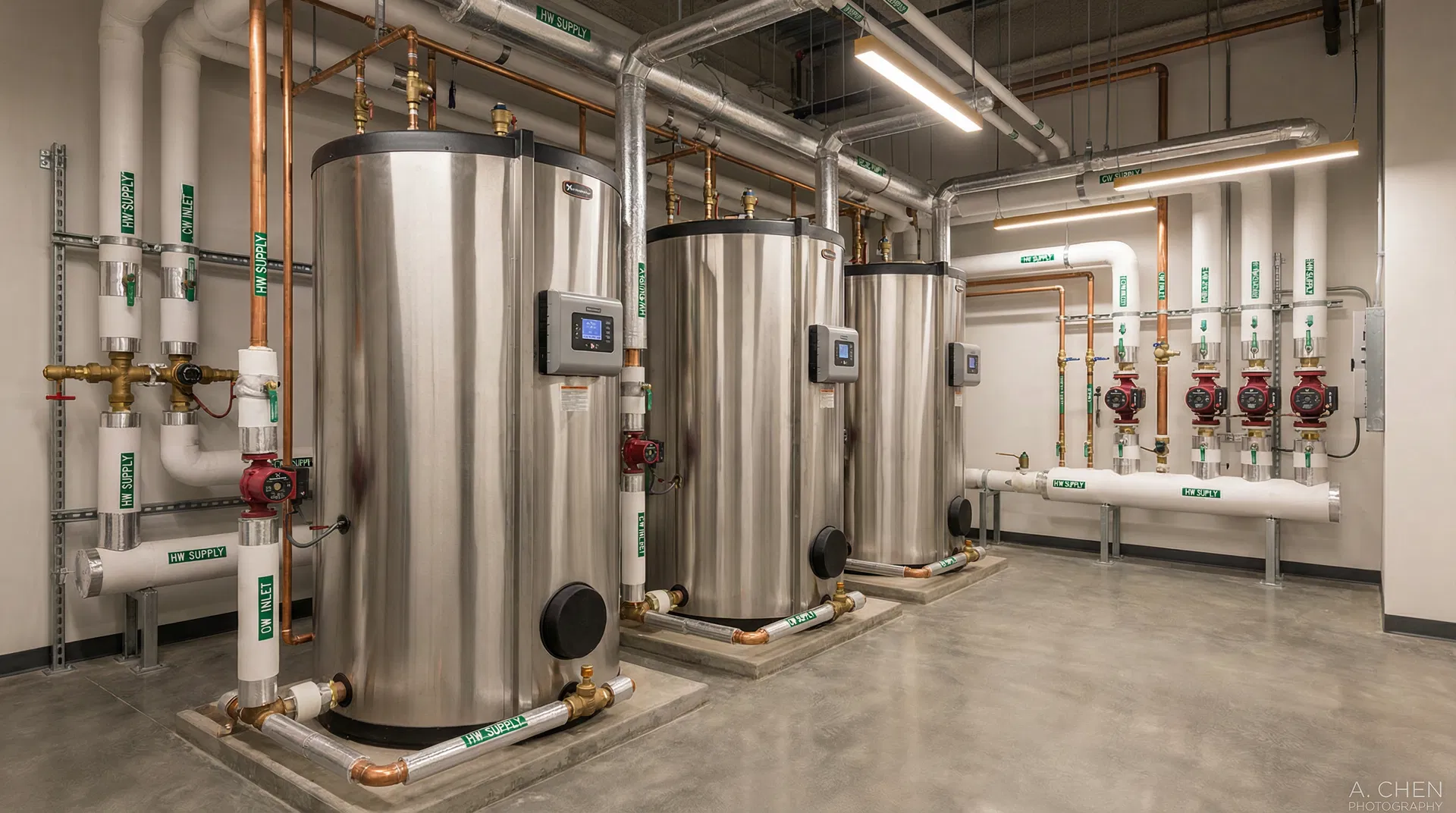
Domestic hot water systems represent a significant portion of a building's energy consumption, and EBS Engineering PC designs these systems to deliver reliable hot water at the required temperature while minimizing energy waste. We evaluate and design a range of hot water generation technologies based on the specific requirements of each project, including the hot water demand profile, available fuel sources, space constraints, and the client's efficiency and sustainability goals.
Storage Water Heaters: For applications with high peak demands and moderate recovery requirements, we design systems using gas-fired or electric storage water heaters. We carefully size storage tanks and heating elements to meet the peak demand without excessive standby losses, and we specify high-efficiency condensing units where gas service is available to achieve thermal efficiencies exceeding 95%.
Tankless (Instantaneous) Water Heaters: For applications where space is limited or demand patterns are intermittent, we design tankless water heater systems that heat water on demand without the standby energy losses associated with storage tanks. We carefully evaluate flow rate requirements and temperature rise to ensure adequate performance under peak conditions.
Indirect Water Heaters & Heat Exchangers: In buildings with central boiler plants, we design indirect domestic hot water systems using shell-and-tube or plate-and-frame heat exchangers that transfer heat from the building's hydronic heating system to the domestic hot water supply. These systems offer high efficiency, long service life, and the ability to leverage the boiler plant's redundancy.
Solar Thermal & Heat Pump Water Heaters: For projects with sustainability goals, we design solar thermal pre-heating systems and heat pump water heaters that significantly reduce the energy required for domestic hot water generation. We perform detailed analyses of solar resource availability, system sizing, and economic payback to ensure these technologies are applied where they provide meaningful benefits.
All our hot water systems include properly designed recirculation systems with thermostatic mixing valves, check valves, balancing valves, and aquastat controls to maintain consistent delivery temperatures while preventing scalding and minimizing energy waste. We design systems to comply with ASSE 1017 and local code requirements for maximum delivery temperatures, particularly in healthcare and residential applications where scalding prevention is critical.
Water Quality & Treatment
Water quality is a critical consideration in plumbing system design, affecting occupant health, fixture and equipment longevity, and system maintenance requirements. EBS Engineering PC evaluates water quality conditions for each project and designs appropriate treatment systems to address identified concerns.
Legionella Prevention: The prevention of Legionella bacteria growth in building water systems is a paramount concern, particularly in healthcare facilities, hotels, and large residential buildings. We design water systems with Legionella prevention strategies including maintaining hot water storage and distribution temperatures above 140°F (with thermostatic mixing valves at points of use), minimizing dead legs and stagnant water, specifying materials that resist biofilm formation, and incorporating supplemental disinfection systems such as copper-silver ionization, chlorine dioxide injection, or point-of-use ultraviolet disinfection where warranted by the facility's risk profile.
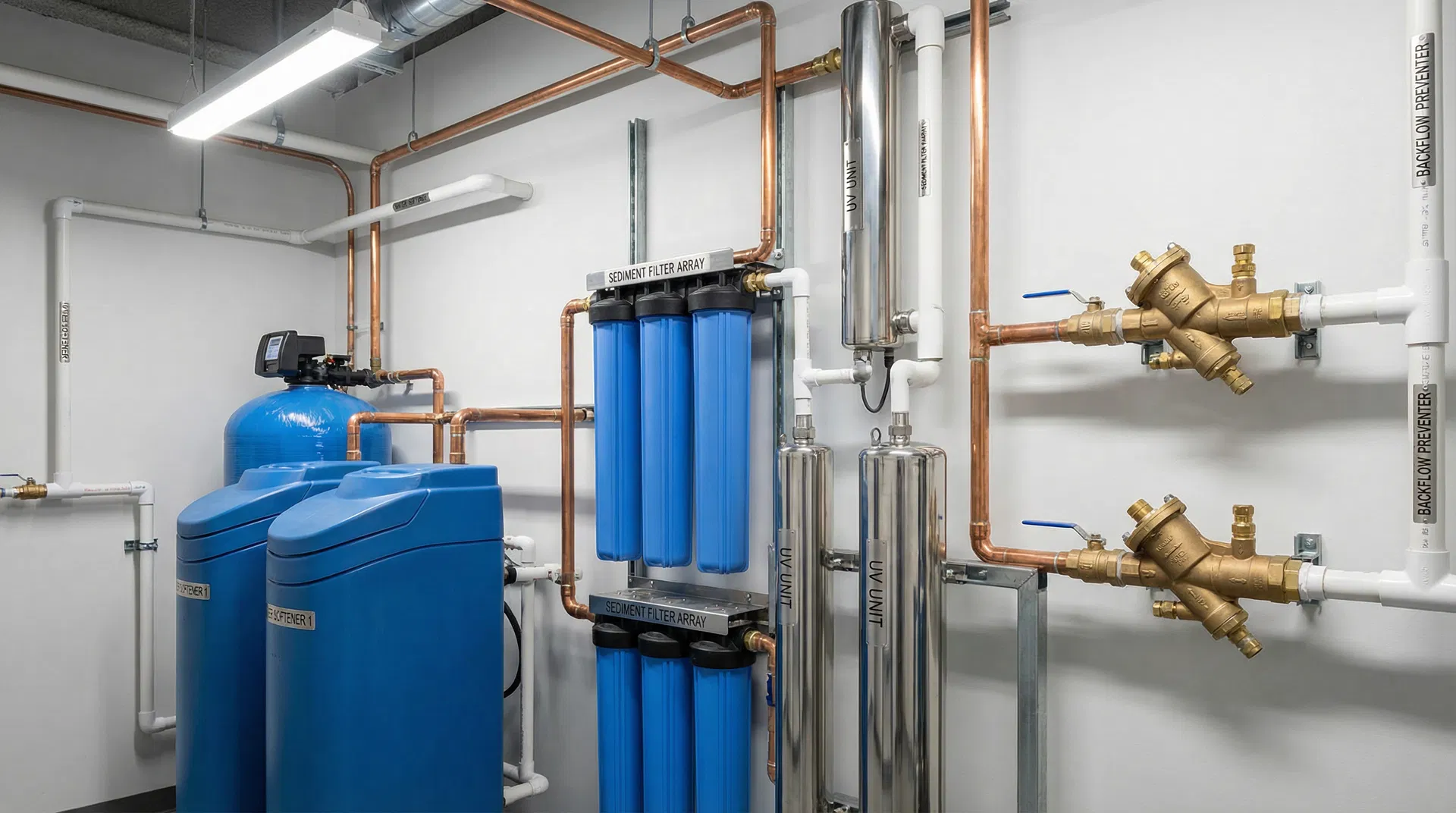
Water Softening & Filtration: In areas with hard water, we design water softening systems to protect piping, fixtures, and water-using equipment from scale buildup. We also specify sediment filtration, activated carbon filtration, and other treatment technologies as needed to address specific water quality concerns such as chlorine taste and odor, particulate matter, or elevated levels of specific contaminants.
Backflow Prevention: Protecting the potable water supply from contamination through cross-connections is a fundamental requirement of plumbing design. We identify all potential cross-connections in the building's plumbing system and specify the appropriate backflow prevention assemblies — including reduced pressure zone (RPZ) assemblies, double check valve assemblies (DCVA), and atmospheric vacuum breakers — in accordance with the applicable plumbing code and the local water authority's requirements.
Building Condition Assessment
For existing buildings, EBS Engineering PC performs comprehensive plumbing system condition assessments to evaluate the current state of water supply, drainage, and hot water systems, identify aging infrastructure, and develop upgrade strategies. Our assessments provide building owners with the information needed to plan capital improvements, address water quality concerns, and ensure system reliability.
During a condition assessment, we visually inspect water supply piping, drainage piping, hot water systems, and specialty plumbing equipment. We document pipe materials, ages, apparent condition, and any visible signs of corrosion, leaks, or deterioration. We evaluate water pressure and flow characteristics, test for backflow protection integrity, and assess hot water system performance and efficiency. We review maintenance records and identify any deferred maintenance items or code compliance issues.
We assess water quality concerns such as hard water, discoloration, or taste and odor issues, and recommend appropriate treatment systems. We identify piping systems approaching end of life and provide recommendations for replacement timing and material upgrades. For systems requiring improvements, we provide preliminary scope and budget guidance to support capital planning and strategic decision-making.
Current Code Compliance & Standards
All plumbing systems designed by EBS Engineering PC are developed in strict compliance with the currently adopted plumbing codes and standards. Our engineers maintain thorough knowledge of the International Plumbing Code (IPC), the International Fuel Gas Code (IFGC), the International Mechanical Code (IMC) as it pertains to plumbing-related systems, and all applicable state and local amendments.
We design to the requirements of the New York State Plumbing Code and coordinate with local authorities having jurisdiction (AHJ) to ensure our designs meet all local requirements. Our designs reference and comply with numerous industry standards including ASME, ASTM, ASSE, AWWA, NSF, and UL standards for materials, equipment, and installation practices.
For healthcare projects, we design plumbing systems in compliance with the Facility Guidelines Institute (FGI) Guidelines for Design and Construction of Hospitals and Outpatient Facilities, which impose additional requirements for medical gas systems, special waste handling, and infection control measures. For food service projects, we ensure compliance with the applicable health department requirements for grease interceptors, indirect waste connections, and food-grade materials.
Our commitment to code compliance is ongoing. We actively monitor code updates and amendments, participate in continuing education, and maintain relationships with code officials to ensure our designs consistently meet the current requirements and best practices of the plumbing engineering profession.
Explore Our Other Services
Comprehensive MEP engineering solutions for every project need