
Life Safety Engineering
Fire Alarm & Life Safety
Comprehensive fire alarm system design, emergency voice/alarm communication, mass notification systems, emergency lighting, and life safety code compliance — protecting building occupants through intelligent detection, notification, and system integration.
Fire Alarm System Design
The fire alarm system is the central nervous system of a building's fire and life safety infrastructure, detecting fire conditions, alerting occupants, notifying the fire department, and initiating the operation of other fire protection systems. EBS Engineering PC designs fire alarm systems in accordance with NFPA 72 (National Fire Alarm and Signaling Code) and all applicable building code requirements, ensuring the highest level of occupant protection.
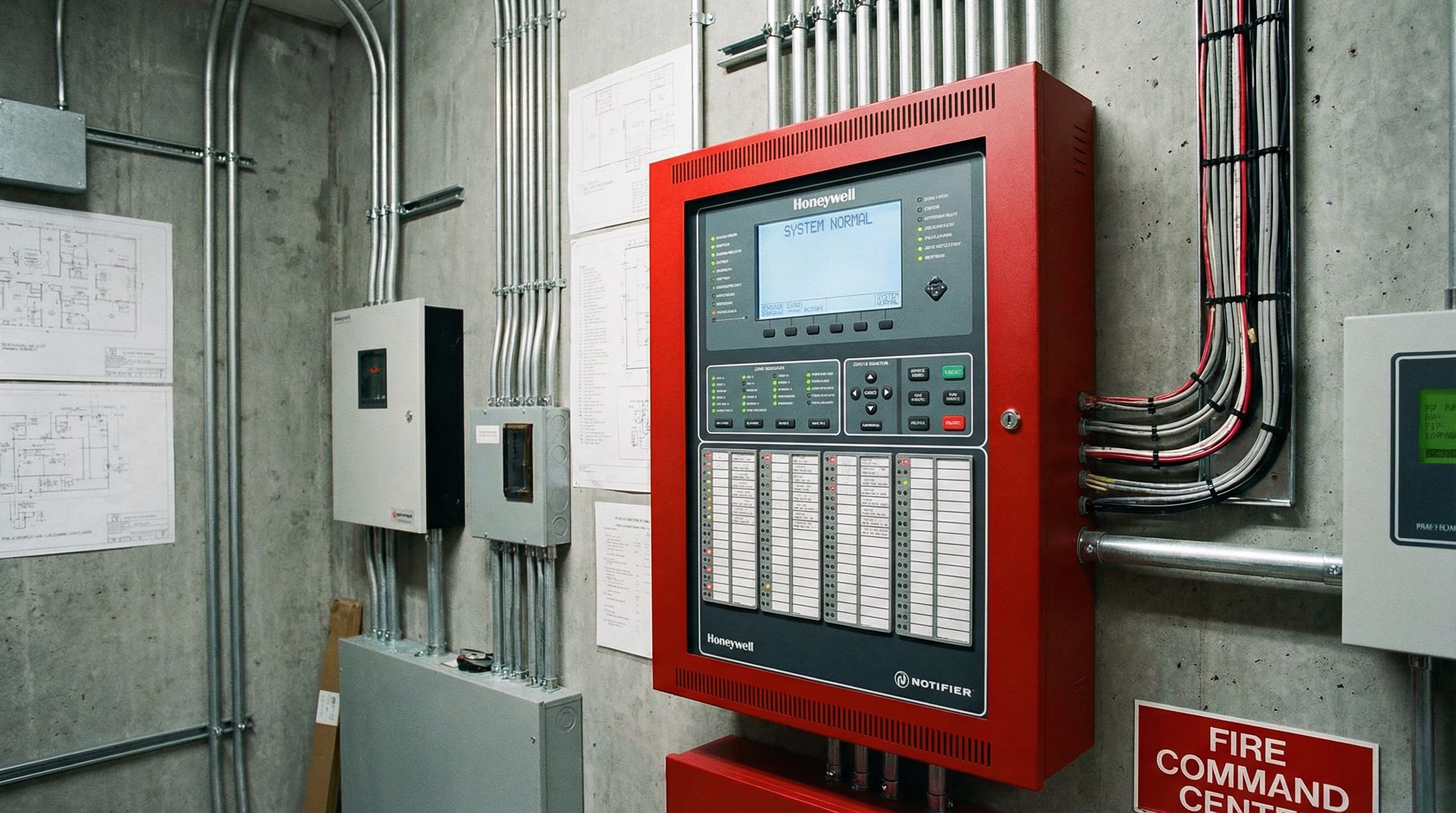
We design addressable fire alarm systems that provide individual device identification, enabling rapid pinpointing of alarm locations and simplified troubleshooting. Each device on the signaling line circuit (SLC) has a unique address, allowing the fire alarm control panel (FACP) to identify the exact device in alarm, supervisory, or trouble condition. This level of granularity is essential for large and complex buildings where quick identification of the alarm source can save critical response time.
Our fire alarm system designs begin with a thorough analysis of the building's occupancy classification, construction type, height, area, and specific hazards to determine the required level of fire alarm protection. We design systems ranging from basic manual fire alarm systems with pull stations and notification appliances to fully automatic systems with comprehensive detection coverage, voice evacuation, and integration with multiple building systems.
Every design includes comprehensive system riser diagrams, floor plan device layouts, and conduit and wiring diagrams. Battery calculations and voltage drop calculations are performed by the selected fire alarm vendor, as these are dependent on the specific device properties and characteristics of each manufacturer's equipment. We specify fire alarm control panels with adequate capacity for the initial installation plus a minimum of 20% spare capacity for future expansion, ensuring the system can grow with the building's needs.
Fire Detection & Initiating Devices
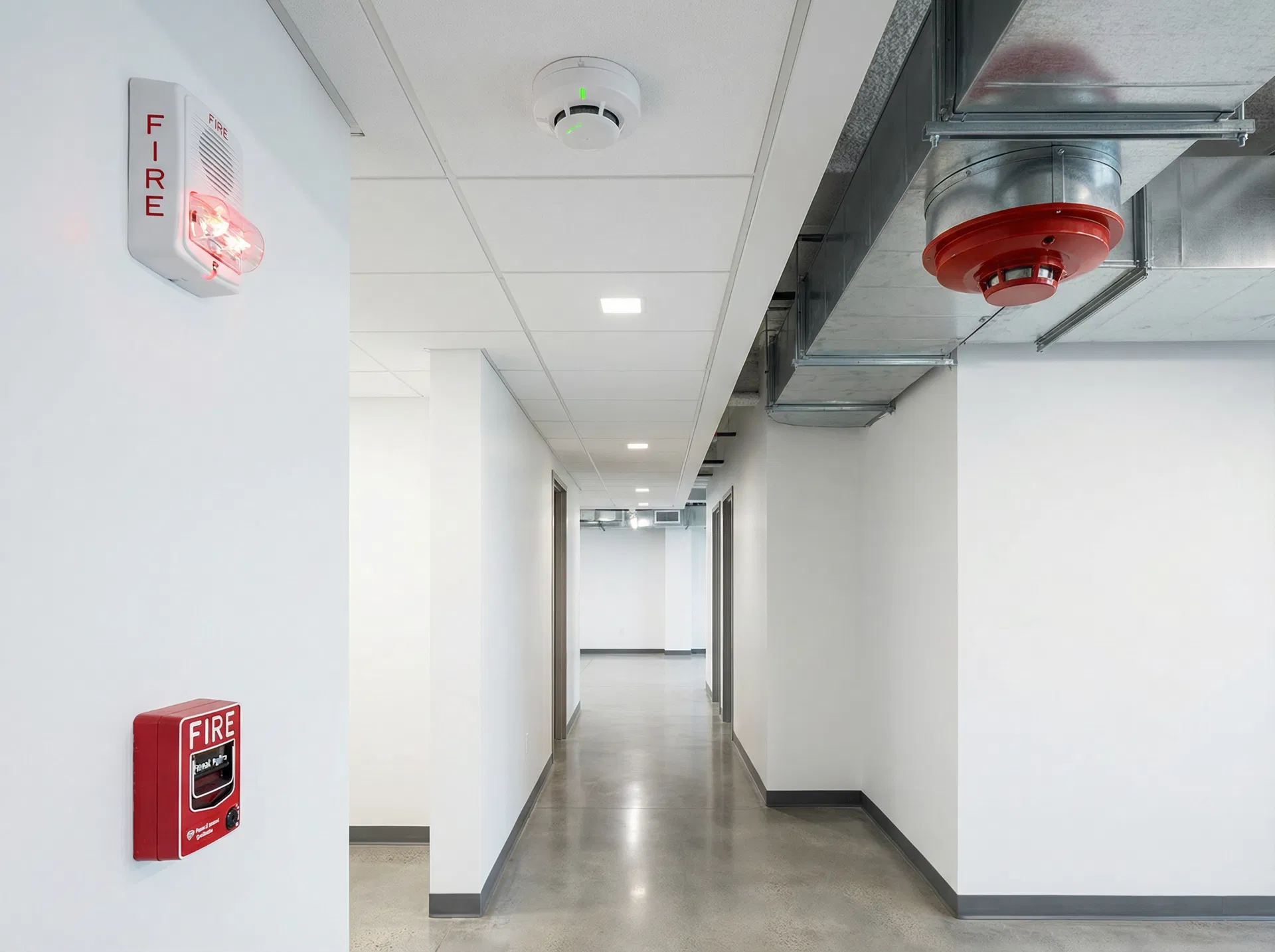
The selection and placement of fire detection devices is one of the most critical aspects of fire alarm system design. EBS Engineering PC specifies initiating devices based on the specific hazards, environmental conditions, and code requirements of each space, ensuring reliable detection while minimizing nuisance alarms.
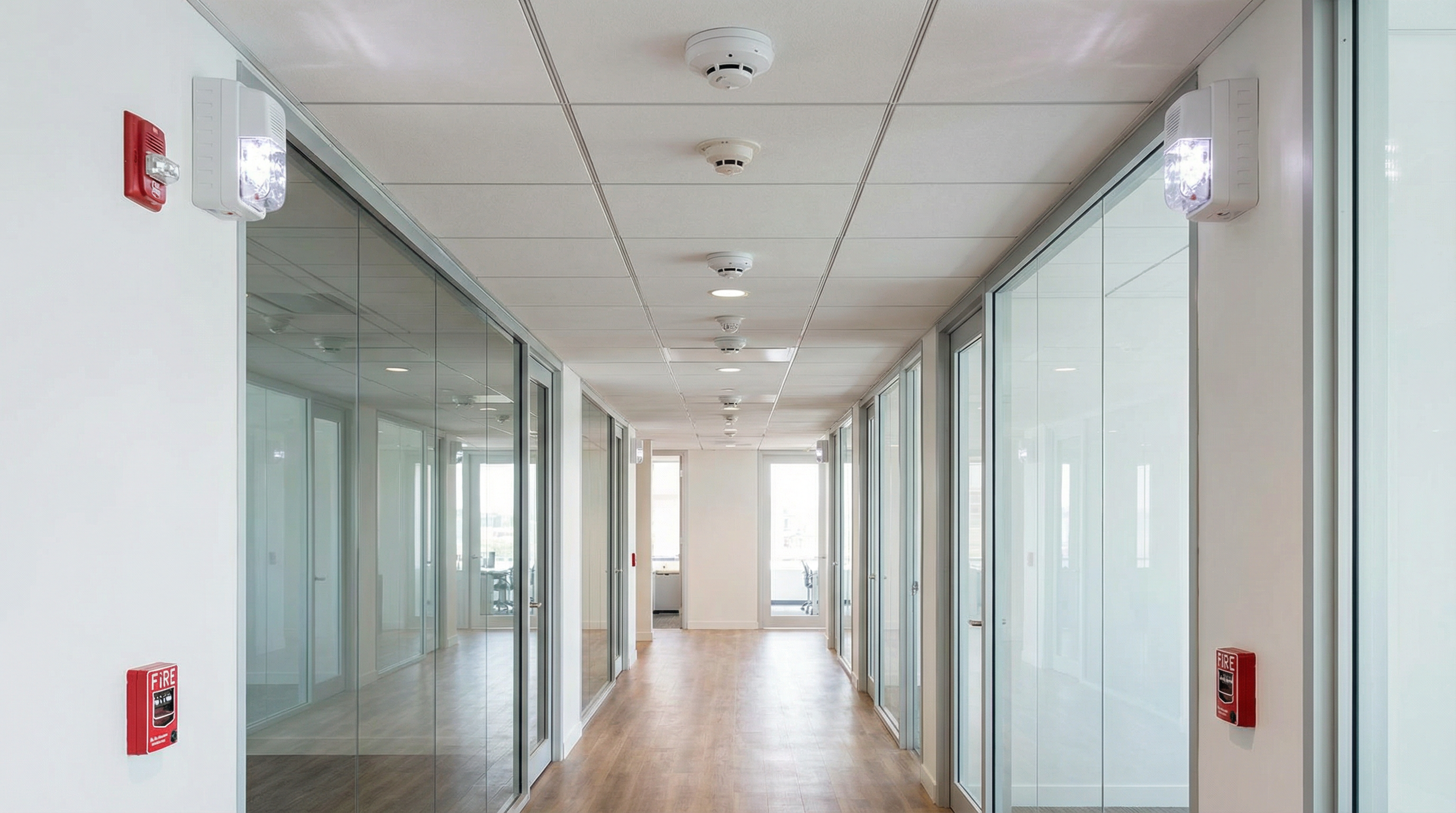
Smoke Detectors: We specify photoelectric, ionization, and multi-criteria smoke detectors based on the anticipated fire signature in each area. Photoelectric detectors excel at detecting slow, smoldering fires that produce large smoke particles, making them ideal for sleeping areas, corridors, and spaces with electrical equipment. Multi-criteria detectors combine photoelectric, thermal, and CO sensing elements with advanced algorithms to provide superior detection while dramatically reducing false alarms — a critical consideration in environments such as kitchens, mechanical rooms, and parking garages.
Heat Detectors: We design with both fixed-temperature and rate-of-rise heat detectors for environments where smoke detectors would be subject to frequent nuisance alarms, such as kitchens, laundry rooms, mechanical rooms, and unheated spaces. We specify appropriate temperature ratings based on the maximum expected ambient temperature in each space.
Specialty Detectors: For spaces with unique detection challenges, we specify beam detectors for high-ceiling areas (atriums, warehouses, auditoriums), air sampling detection systems (VESDA/aspirating) for early warning in critical environments such as data centers and clean rooms, and flame detectors for areas with flammable liquid hazards. We also design duct smoke detection systems for HVAC systems as required by the mechanical code, specifying detector locations, sampling tube configurations, and integration with the air handling unit controls.
Manual Pull Stations: We locate manual fire alarm pull stations at all required exits, exit stairway entrances, and other locations as required by NFPA 72 and the building code, ensuring they are accessible, visible, and mounted at the proper height per ADA requirements.
Sprinkler System Monitoring: We design the interface between the fire alarm system and the fire sprinkler system, including waterflow switches on each sprinkler zone riser and tamper switches on all control valves, ensuring that sprinkler system activation and valve supervisory conditions are immediately reported to the fire alarm control panel and the monitoring station.
Notification Appliance Design
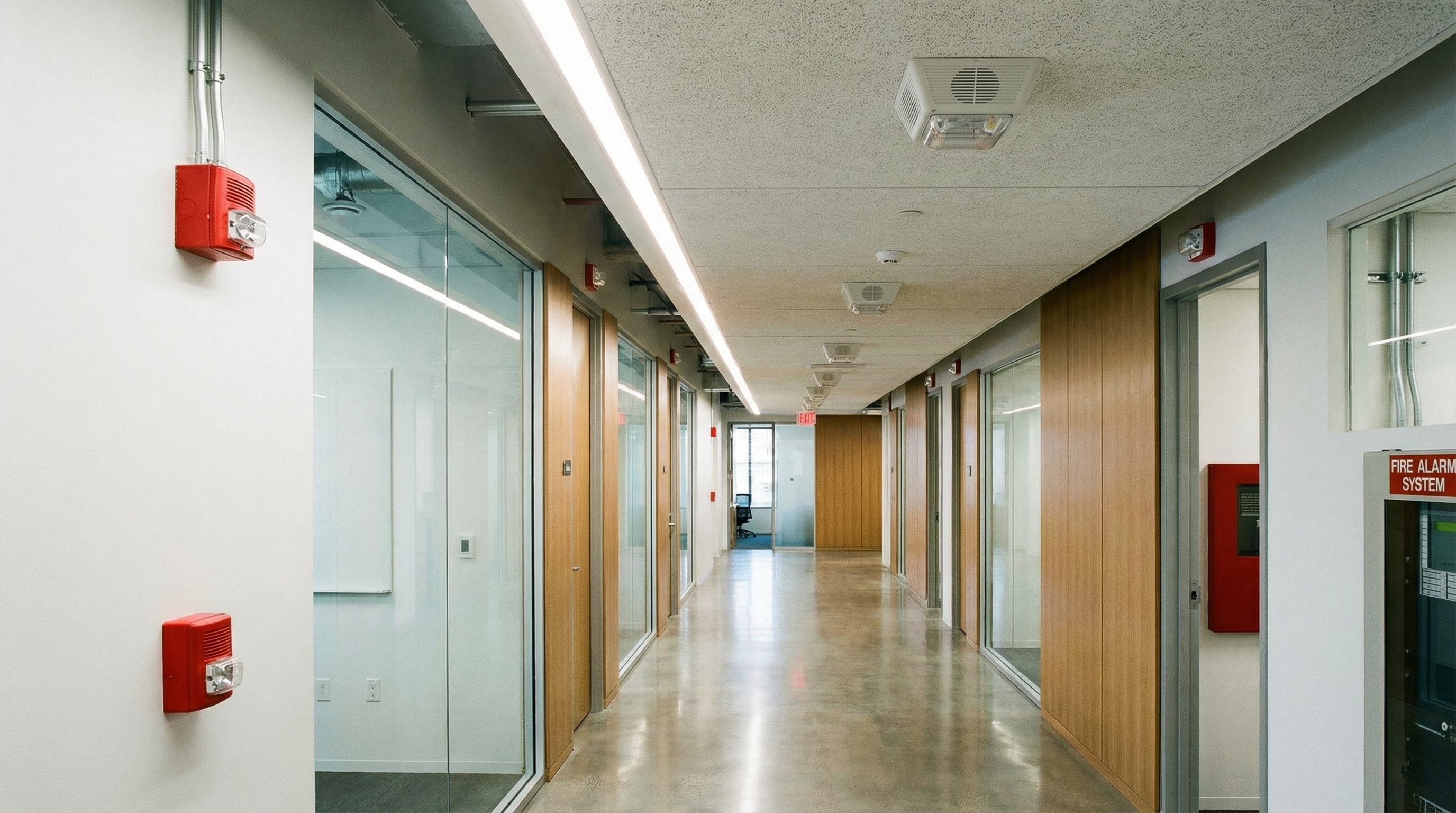
Notification appliance design is equally as critical as detection design — a fire alarm system that detects a fire but fails to adequately notify occupants has not fulfilled its life safety mission. EBS Engineering PC performs detailed calculations and layouts to ensure that both audible and visible notification appliances provide code-compliant coverage throughout all occupied areas of the building.
Audible Notification: We design audible notification appliance layouts that ensure sound levels meet the minimum audibility requirements of NFPA 72 throughout all occupied areas. In general occupancy areas, the alarm signal must be at least 15 dB above the average ambient sound level or 5 dB above the maximum sound level having a duration of at least 60 seconds, whichever is greater. In sleeping areas, the alarm signal must produce a minimum of 75 dBA at the pillow level. We perform room-by-room sound level calculations to verify compliance, accounting for wall construction, ceiling heights, ambient noise levels, and appliance mounting locations.
Visible Notification: We design visible notification appliance (strobe) layouts with proper candela ratings and spacing to ensure code-compliant coverage in all required areas. Our designs follow the room spacing tables in NFPA 72, selecting appropriate candela ratings based on room dimensions and mounting heights. We specify strobes in all public and common-use areas, restrooms, corridors, and any area where ambient noise levels may prevent occupants from hearing the audible alarm. All visible appliances are synchronized to prevent photosensitive seizures, as required by NFPA 72.
Notification Appliance Requirements by Space Type
| Space Type | Audible Required | Visible Required | Min. Sound Level |
|---|---|---|---|
| General Occupancy | Yes | Yes (public areas) | 15 dB above ambient |
| Sleeping Areas | Yes (520 Hz low freq.) | Yes | 75 dBA at pillow |
| Corridors | Yes | Yes | 15 dB above ambient |
| Restrooms | Yes | Yes | 15 dB above ambient |
| Mechanical Rooms | Yes | Yes | 5 dB above max noise |
| High Noise Areas | Yes + visible | Yes | 5 dB above max noise |
Emergency Voice/Alarm Communication (EVAC)
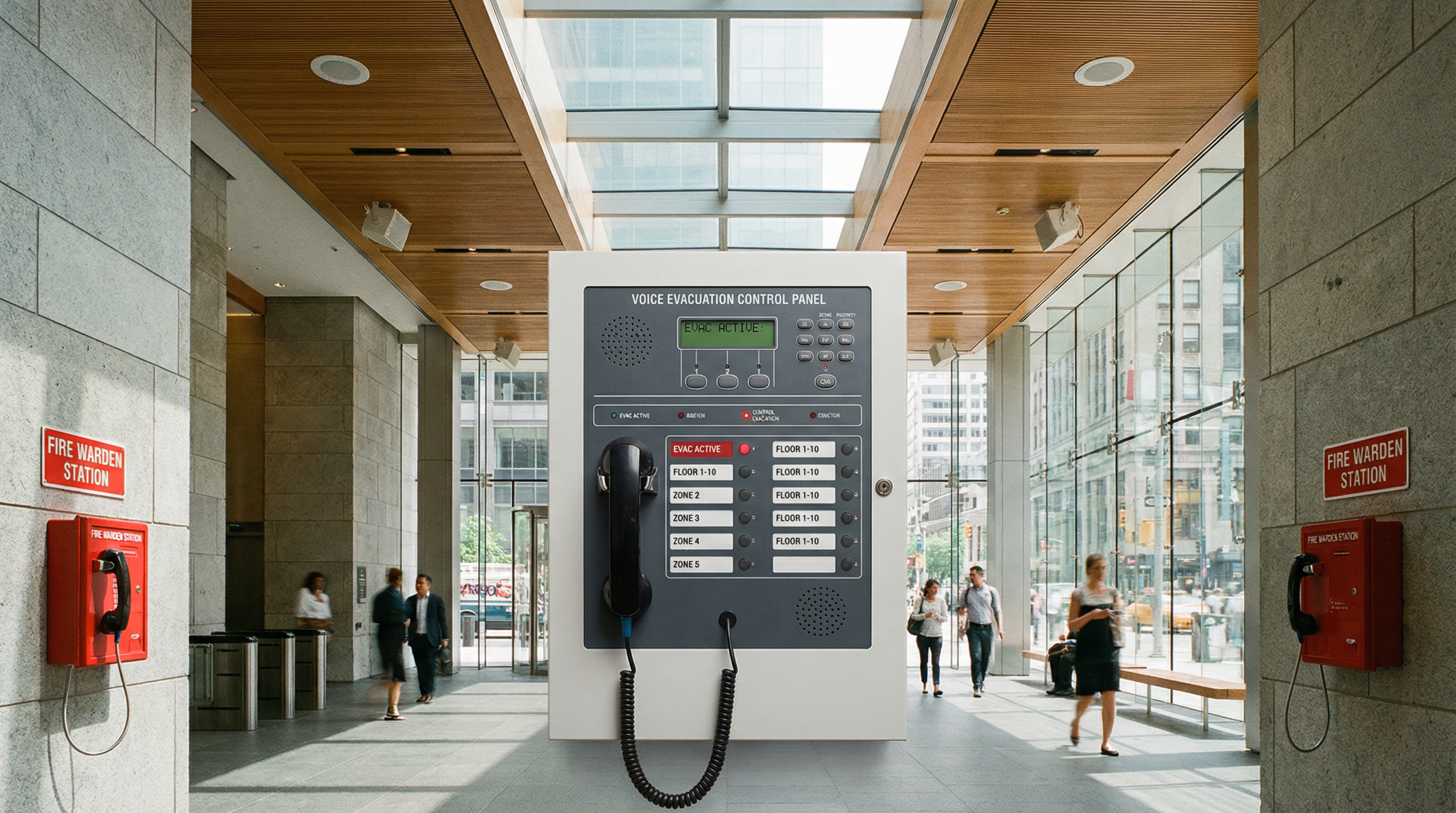
For larger and more complex buildings, EBS Engineering PC designs Emergency Voice/Alarm Communication (EVAC) systems that allow fire command personnel to deliver live voice instructions to building occupants during emergencies, supplementing or replacing standard alarm tones. EVAC systems are required by code in high-rise buildings, large assembly occupancies, and certain healthcare and institutional facilities, and are increasingly specified in other building types as a best practice for occupant safety.
Our EVAC system designs include distributed speaker networks with amplifiers sized to deliver intelligible voice messages throughout all occupied areas. We perform speech intelligibility calculations and specify speaker types, wattage taps, and mounting locations to achieve a minimum Speech Transmission Index (STI) of 0.50 or a Common Intelligibility Scale (CIS) score of 0.70, as required by NFPA 72. We account for room acoustics, reverberation times, ambient noise levels, and speaker directivity patterns in our calculations.
The EVAC system includes pre-recorded messages for common emergency scenarios (fire alarm, all-clear, general evacuation) as well as a live microphone at the fire command center for real-time communication. We design systems with multiple paging zones that align with the building's smoke control zones and evacuation strategy, allowing selective messaging to specific floors or areas during a phased evacuation.
Mass Notification Systems (MNS): For facilities requiring the ability to communicate emergency information for threats beyond fire — such as severe weather, active shooter, hazardous material release, or other security events — we design mass notification systems in accordance with NFPA 72 Chapter 24. Our MNS designs integrate with the fire alarm system while providing independent control and priority override capabilities, ensuring that the most critical messages always reach building occupants regardless of other system activity.
Emergency Lighting & Egress Illumination
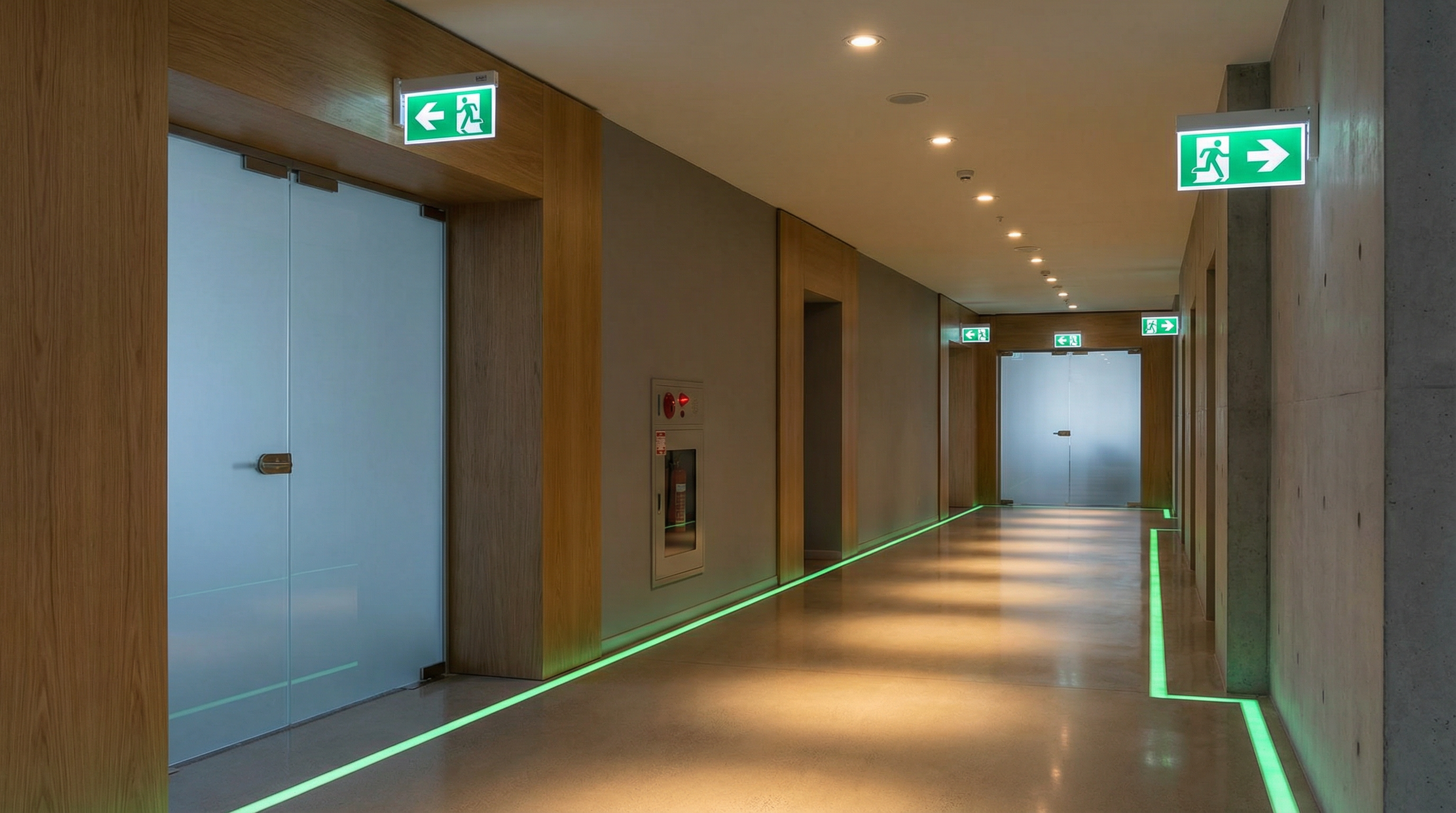
Emergency lighting and exit signage are fundamental components of a building's life safety system, ensuring that occupants can safely navigate to exits during power failures and emergency conditions. EBS Engineering PC designs emergency lighting systems in accordance with NFPA 101 (Life Safety Code), the International Building Code (IBC), and all applicable local codes.
Our emergency egress lighting designs ensure a minimum illumination level of 1 foot-candle (10.8 lux) along the path of egress, measured at the floor level, as required by code. At exit discharge points, we design for a minimum of 1 foot-candle average with a maximum-to-minimum uniformity ratio not exceeding 40:1. We perform photometric calculations to verify compliance and specify emergency lighting units, battery-powered emergency ballasts, and generator-backed lighting circuits as appropriate for each project.
Exit Signage: We design exit sign placement to ensure that the nearest exit is clearly visible from any point in the exit access corridor, as required by code. Our designs include both internally illuminated and photoluminescent exit signs, with LED light sources specified for energy efficiency and long lamp life. We coordinate exit sign placement with the building's egress plan, ensuring that signs direct occupants along the shortest path to the nearest exit and that directional indicators are provided where the path of egress is not immediately apparent.
Emergency Power Duration: We design emergency lighting systems to provide illumination for a minimum of 90 minutes, as required by NFPA 101 and the IBC. For buildings with emergency generators, we design the emergency lighting to be powered from the generator via automatic transfer switches, with integral battery backup units provided for the 10-second period between normal power failure and generator startup. For buildings without generators, we specify self-contained battery emergency lighting units and battery-equipped exit signs with the required 90-minute backup capacity.
Photoluminescent Egress Path Markings: For high-rise buildings and other occupancies where required by code, we design photoluminescent egress path marking systems that provide visible guidance along the path of egress in stairwells and corridors, even in complete darkness. These systems include luminescent strips on stair nosings, handrails, door frames, and obstacle perimeters, charged by the building's normal lighting and requiring no electrical power or batteries to function.
System Integration & Monitoring
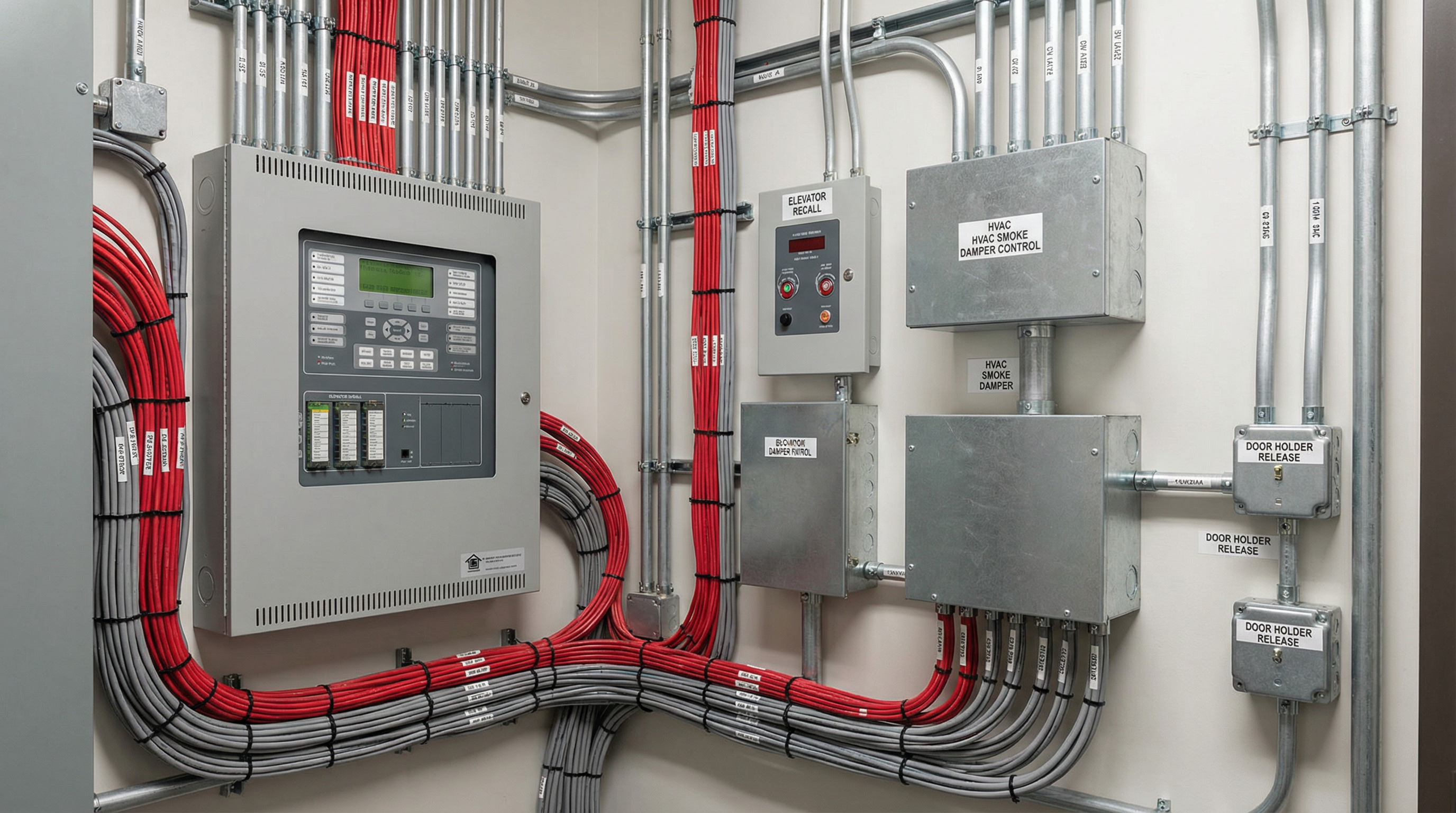
A fire alarm system does not operate in isolation — it interfaces with numerous other building systems to provide a coordinated life safety response. EBS Engineering PC designs all fire alarm system interfaces and integration points, ensuring that every connected system responds correctly and reliably when the fire alarm activates.
Elevator Recall: We design the interface between the fire alarm system and the elevator control system to provide Phase I Emergency Recall in accordance with ASME A17.1 and the applicable building code. Our designs include lobby smoke detectors, hoistway smoke detectors, and machine room smoke/heat detectors that trigger elevator recall to the designated floor (or alternate floor if the designated floor is the floor of alarm origin). We also design the interface for Phase II Emergency In-Car Operation for firefighter use.
HVAC Shutdown & Smoke Control: We design the fire alarm interface with the HVAC system to shut down air handling units serving the zone of alarm origin, preventing the spread of smoke through the ductwork. For buildings with engineered smoke control systems, we design the fire alarm interface to activate smoke control sequences including stairwell pressurization, smoke exhaust, and zone pressurization in accordance with NFPA 92.
Additional System Interfaces: Our fire alarm integration designs also include door holder release (electromagnetic door holders on fire-rated doors release upon alarm, allowing doors to close), access control override (access-controlled doors unlock upon fire alarm activation to ensure free egress), fire suppression system monitoring (pre-action, deluge, and clean agent system status and activation), and fire pump monitoring (fire pump running, power available, and phase reversal status).
Central Station Monitoring: We design the fire alarm system's connection to a UL-listed central station monitoring service via dual communication paths (typically IP and cellular) as required by NFPA 72. This ensures that alarm, supervisory, and trouble signals are transmitted to the monitoring station and relayed to the fire department even if one communication path fails.
Building Condition Assessment
For existing buildings, EBS Engineering PC performs fire alarm and life safety system condition assessments to evaluate the current state of detection, notification, emergency lighting, and system integration components. Our assessments help building owners understand system condition, identify aging infrastructure, and develop upgrade strategies to maintain code compliance and occupant safety.
We assess system capacity to support current building occupancy and use, and identify any deficiencies relative to current code requirements. We identify aging components approaching end of life or becoming obsolete (such as older addressable fire alarm systems with limited parts availability) and provide recommendations for replacement timing and technology improvements. For systems requiring upgrades, we provide preliminary scope and budget guidance to support capital planning and strategic decision-making.
Code Compliance & Standards
All fire alarm and life safety system designs by EBS Engineering PC are developed in strict compliance with the applicable codes, standards, and guidelines. Our thorough understanding of the regulatory landscape ensures that every system we design meets or exceeds the requirements of the Authority Having Jurisdiction (AHJ), facilitating smooth plan reviews and inspections.
Primary Codes & Standards
- •NFPA 72 — National Fire Alarm and Signaling Code
- •NFPA 101 — Life Safety Code
- •NFPA 92 — Standard for Smoke Control Systems
- •NFPA 110 — Standard for Emergency and Standby Power Systems
- •IBC / IFC — International Building Code / International Fire Code
- •ASME A17.1 — Safety Code for Elevators (Firefighter Service)
Additional Standards
- •UL 864 — Standard for Control Units and Accessories for Fire Alarm Systems
- •UL 2572 — Standard for Mass Notification Systems
- •ADA / ICC A117.1 — Accessibility requirements for alarm devices
- •NFPA 70 (NEC) — Wiring requirements for fire alarm circuits
- •NYS Building Code — New York State specific requirements
- •Local AHJ Requirements — Jurisdiction-specific amendments and standards
Our engineers maintain current knowledge of code changes and participate in continuing education to stay abreast of evolving fire alarm technology and regulatory requirements. We coordinate closely with the AHJ during the design phase to address any jurisdiction-specific requirements and facilitate a smooth permitting and inspection process.
Explore Our Other Services
Comprehensive MEP engineering solutions for every project need