Engineering Services
Mechanical Engineering
Expert HVAC system design including load modeling, system selection, ventilation, energy recovery, and building automation for optimal comfort and efficiency.
HVAC Load Modeling & Analysis
Accurate heating and cooling load calculations form the foundation of every successful HVAC design. At EBS Engineering PC, we perform detailed load modeling using industry-standard software and methodologies endorsed by ASHRAE (American Society of Heating, Refrigerating and Air-Conditioning Engineers) to ensure that every system we design is properly sized — neither oversized (which wastes energy and capital) nor undersized (which compromises occupant comfort).
Our load analysis process considers all factors that influence a building's thermal performance, including the building envelope characteristics (wall, roof, and window U-values and solar heat gain coefficients), internal heat gains from occupants, lighting, and equipment, ventilation requirements, infiltration rates, and the local climate data for the project location. We use ASHRAE's Transfer Function Method (TFM) and Radiant Time Series (RTS) methods, implemented through software such as Trane TRACE, Carrier HAP, and EnergyPlus, to develop hour-by-hour load profiles that capture the dynamic nature of building thermal loads.
Beyond simple peak load calculations, we perform detailed zone-by-zone analysis to identify areas with unique thermal characteristics, such as perimeter zones with high solar exposure, interior zones with significant equipment heat gains, or spaces with unusual occupancy patterns. This granular approach allows us to design systems that respond effectively to the diverse conditions within a building, improving both comfort and energy efficiency.
For complex projects, we perform energy modeling simulations that predict annual energy consumption under various design scenarios, allowing us to evaluate the cost-effectiveness of different HVAC system options, envelope improvements, and energy conservation measures. These models are also used to demonstrate compliance with energy codes such as ASHRAE 90.1 and the IECC, and to support LEED energy credit calculations.
HVAC System Types & Selection
Selecting the right HVAC system for a building is one of the most consequential decisions in the design process, affecting first cost, operating cost, occupant comfort, indoor air quality, maintenance requirements, and architectural flexibility for decades to come. EBS Engineering PC brings deep expertise in the full range of HVAC system types, and we guide our clients through the selection process with clear analysis of the advantages, limitations, and lifecycle costs of each option.
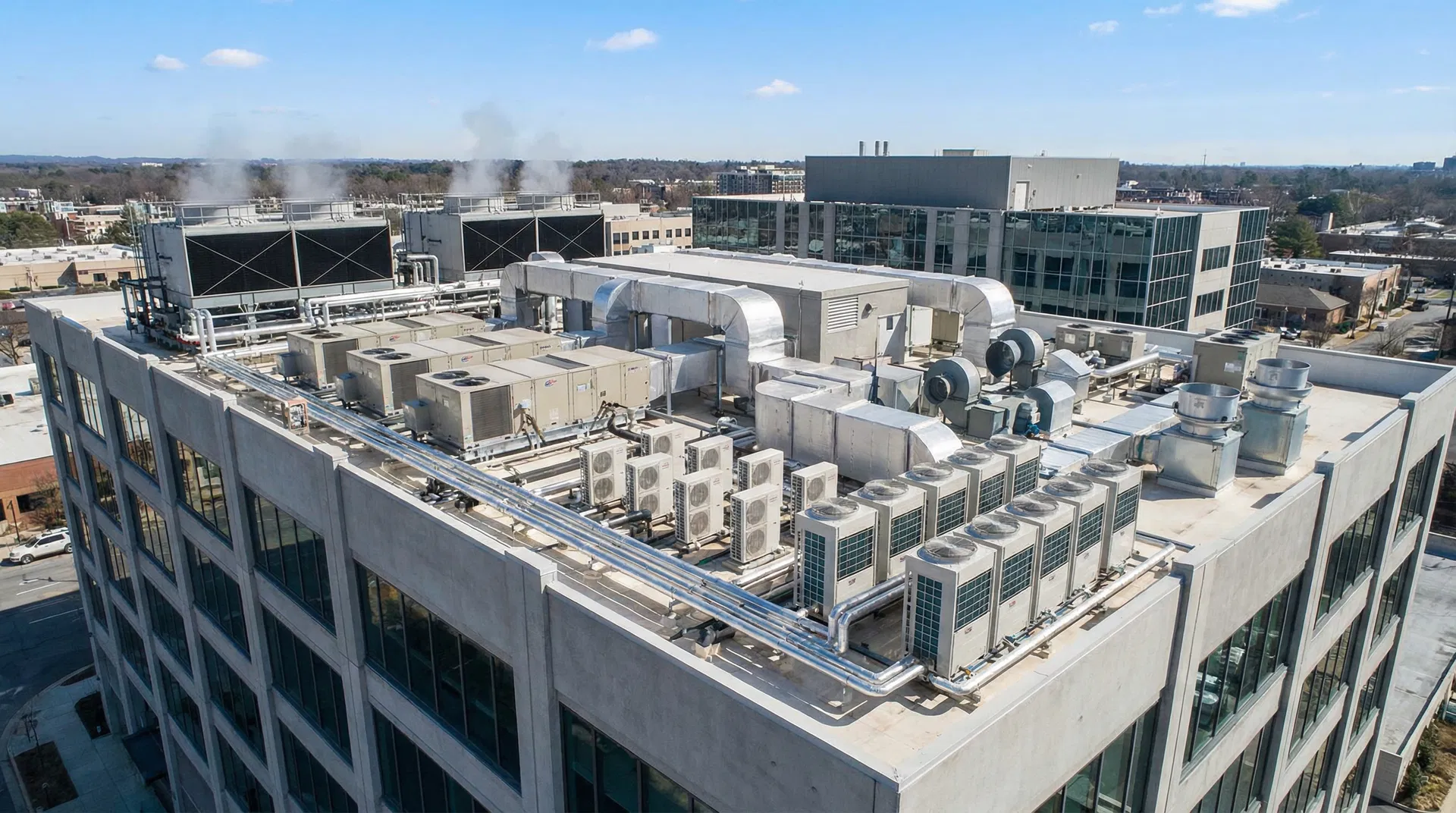
Packaged Rooftop Units (RTUs): These self-contained units are among the most common HVAC solutions for single-story commercial buildings such as retail stores, restaurants, and small offices. We design RTU systems with variable-speed fans, economizer controls, and high-efficiency compressors to maximize energy performance. We specify units that meet or exceed current ASHRAE 90.1 efficiency requirements and coordinate structural curb details, ductwork connections, and electrical/gas service requirements.
Split Systems & Heat Pumps: For applications where rooftop equipment is not feasible or desirable, we design split system configurations with indoor air handlers or fan coil units connected to outdoor condensing units. Air-source heat pumps provide both heating and cooling from a single system and are particularly effective in moderate climates. We also design ground-source (geothermal) heat pump systems that leverage the stable temperature of the earth to achieve exceptional heating and cooling efficiencies.
Variable Refrigerant Flow (VRF) Systems: VRF technology provides exceptional zoning flexibility and energy efficiency, making it ideal for buildings with diverse simultaneous heating and cooling requirements. We design VRF systems with heat recovery capability that can transfer heat from zones requiring cooling to zones requiring heating, dramatically reducing energy consumption. Our VRF designs include proper refrigerant piping layouts, condensate management, and compliance with ASHRAE 15 refrigerant safety requirements.
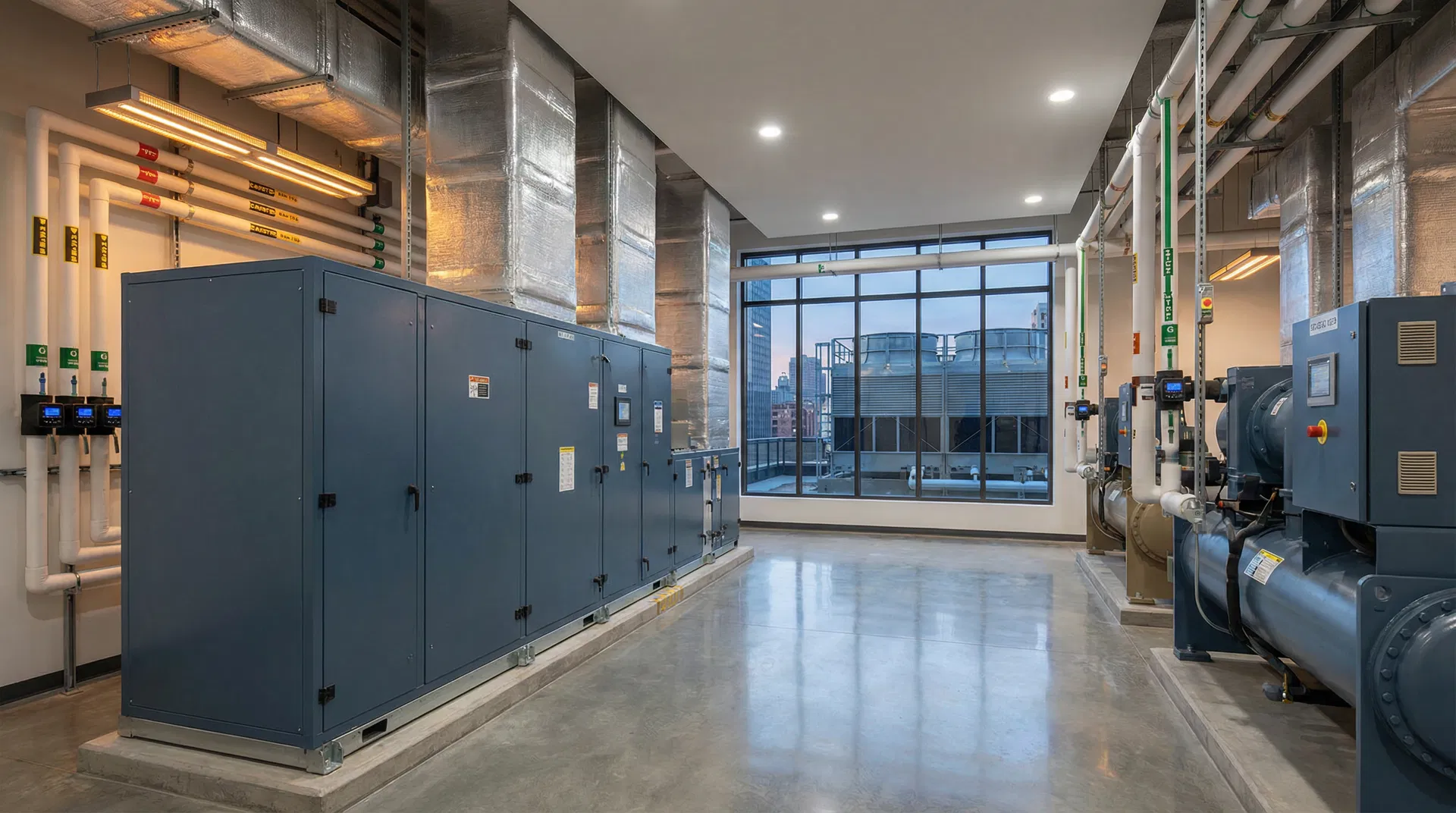
Central Plant Systems: For larger buildings and campus environments, we design central chilled water and hot water plant systems with chillers, boilers, cooling towers, pumps, and distribution piping. Our central plant designs incorporate variable-speed pumping, chiller staging optimization, waterside economizer cycles, and advanced control sequences to minimize energy consumption across all operating conditions. We design both constant-volume and variable-volume distribution systems with appropriate terminal units including fan coil units, chilled beams, and VAV boxes.
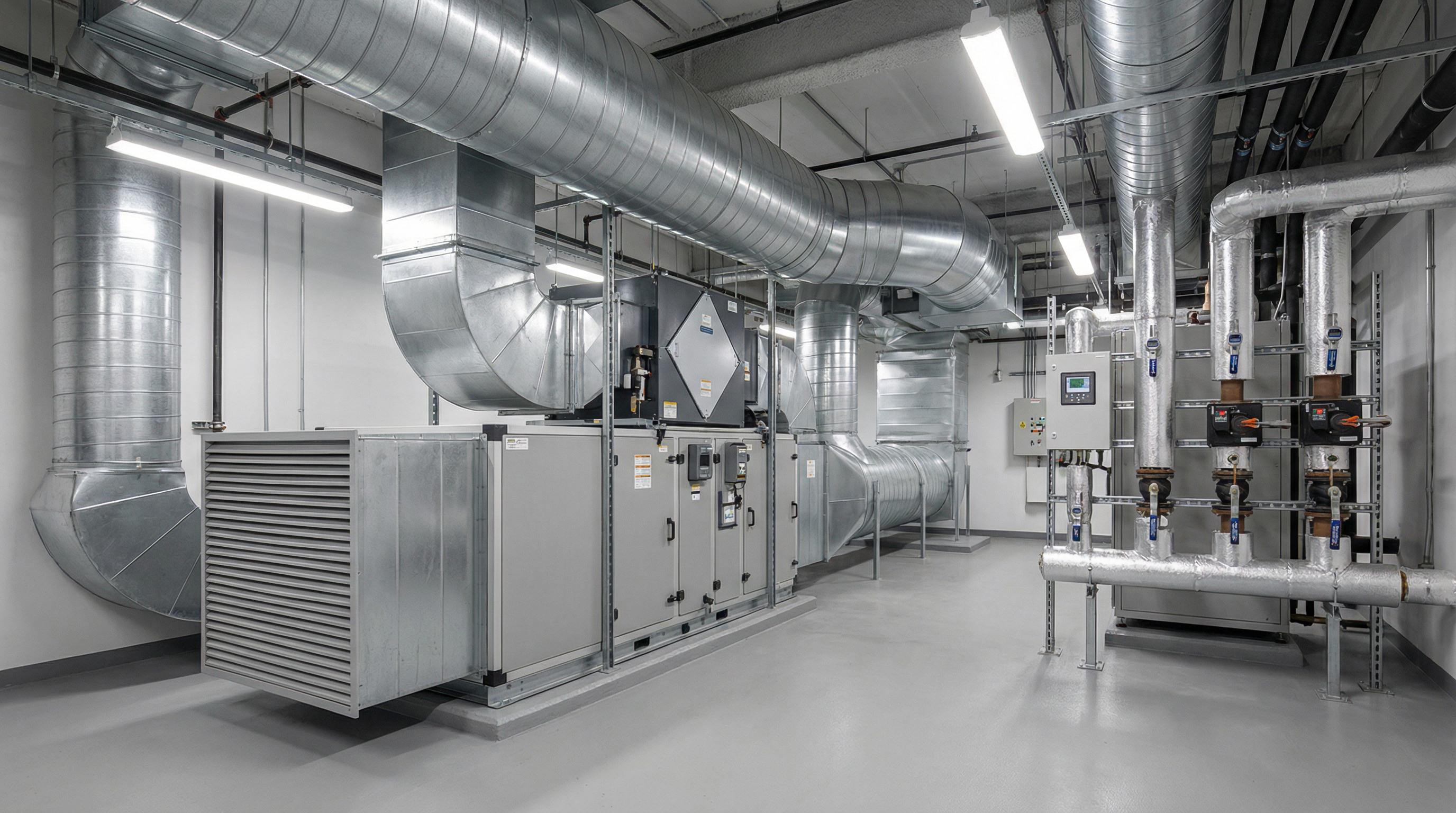
Dedicated Outdoor Air Systems (DOAS): We frequently design DOAS configurations that decouple ventilation from space conditioning, allowing each function to be optimized independently. DOAS units with energy recovery wheels or plate heat exchangers precondition outdoor air before delivering it to the building, significantly reducing the ventilation load on the primary HVAC system.
Ventilation & Indoor Air Quality
Proper ventilation is essential for maintaining healthy indoor air quality and occupant well-being. EBS Engineering PC designs ventilation systems in strict accordance with ASHRAE Standard 62.1 (Ventilation for Acceptable Indoor Air Quality), which establishes minimum outdoor air rates based on occupancy, floor area, and space type. We use the Ventilation Rate Procedure to calculate required outdoor air quantities for each zone and the system-level outdoor air intake, accounting for system ventilation efficiency and zone diversity.
Our ventilation designs incorporate demand-controlled ventilation (DCV) using CO2 sensors in densely occupied spaces such as conference rooms, auditoriums, and dining areas. DCV systems modulate outdoor air intake based on actual occupancy, reducing energy consumption during periods of low occupancy while ensuring adequate ventilation during peak conditions. We also design dedicated exhaust systems for spaces with specific ventilation requirements, including laboratories, medical procedure rooms, and parking garages. For commercial kitchen applications, we design the code-compliant welded steel grease ductwork systems with proper cleanout access doors, fire-rated enclosures, and clearances to combustibles in accordance with NFPA 96 and the International Mechanical Code. The kitchen hoods, exhaust fans, and fire suppression systems (such as Ansul) are typically designed and provided by the equipment manufacturers, while our engineering focuses on the ductwork infrastructure that connects and supports these systems.
Energy recovery ventilation (ERV) is a standard feature of our designs for projects in climates with significant heating or cooling loads. ERV systems transfer heat and moisture between the exhaust air stream and the incoming outdoor air stream, recovering up to 80% of the energy that would otherwise be lost. We select between enthalpy wheels, plate heat exchangers, and heat pipe systems based on the specific requirements of each project, including considerations for cross-contamination, frost prevention, and maintenance access.
For specialized environments such as healthcare facilities, we design ventilation systems that meet the stringent requirements of ASHRAE 170 (Ventilation of Health Care Facilities) and the Facility Guidelines Institute (FGI) Guidelines, including specific air change rates, pressure relationships, temperature and humidity ranges, and filtration levels for each room type.
Building Automation & Controls
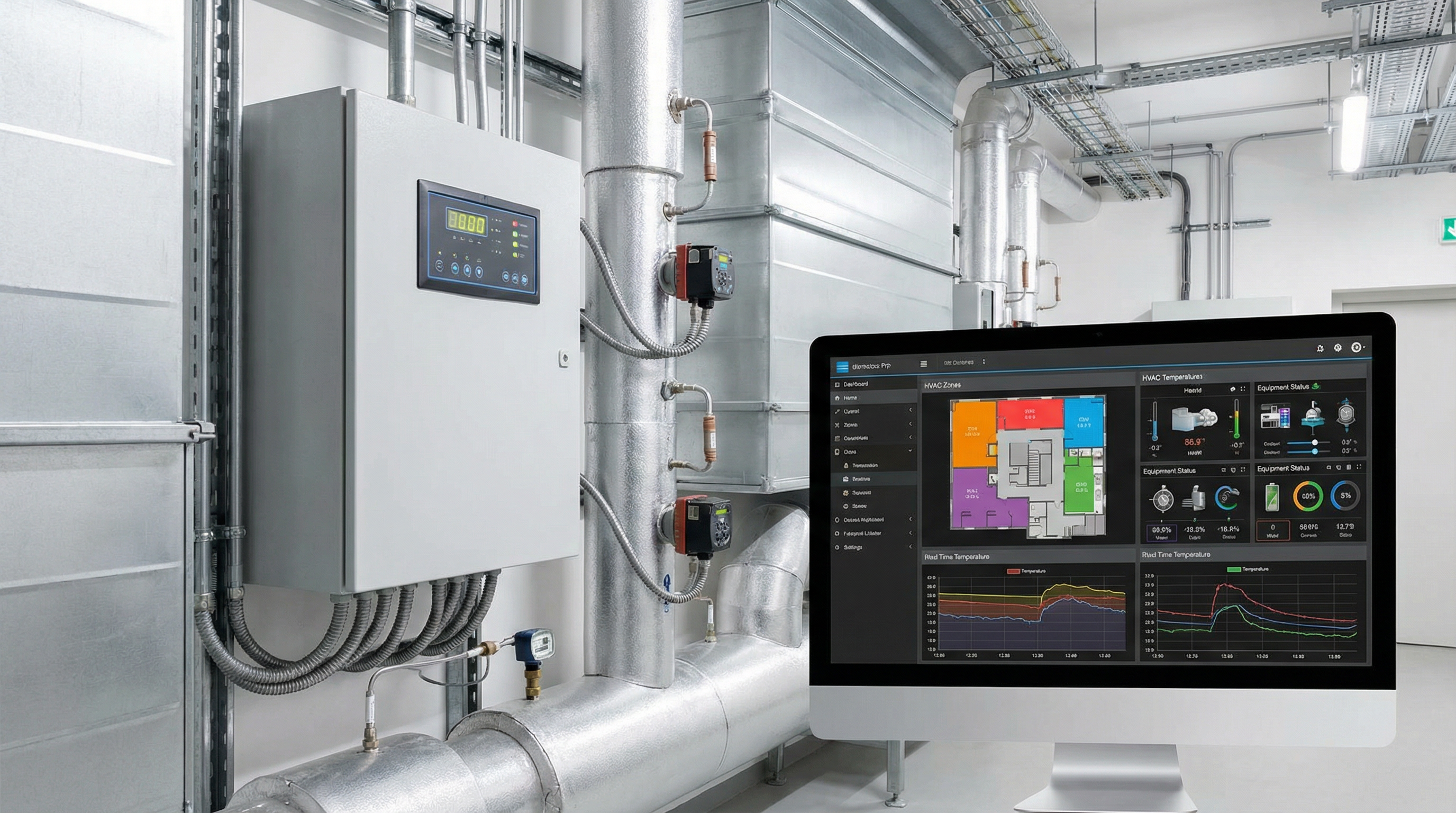
Modern HVAC systems achieve their full potential only when paired with sophisticated building automation and control systems. EBS Engineering PC designs comprehensive control sequences and specifies building automation systems (BAS) that optimize HVAC performance, enable remote monitoring and diagnostics, and provide the data needed for ongoing energy management and system optimization.
Our control designs include detailed sequences of operation for all HVAC equipment, specifying setpoints, control loops, staging logic, economizer operation, morning warm-up and cool-down routines, night setback, optimal start algorithms, and alarm conditions. We design control systems using open protocols such as BACnet and Modbus to ensure interoperability between equipment from different manufacturers and to provide building operators with a unified platform for monitoring and controlling all building systems.
We specify direct digital control (DDC) systems with web-based operator interfaces that allow authorized personnel to monitor system status, adjust setpoints, view trend data, and acknowledge alarms from any location. Our designs include comprehensive points lists, control diagrams, and network architecture drawings that clearly document the control system design and facilitate installation and ongoing maintenance.
Building Condition Assessment
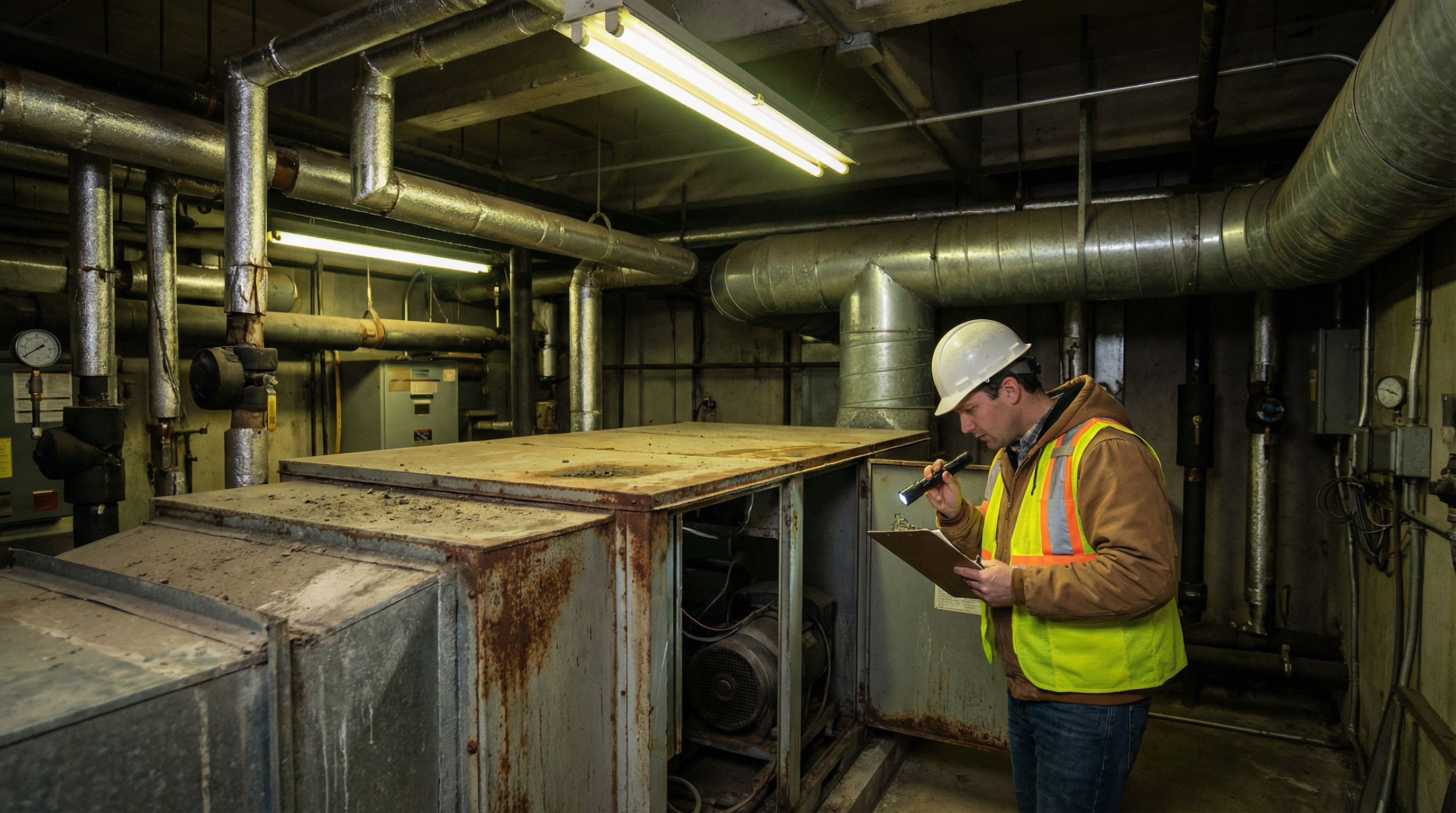
For existing buildings, EBS Engineering PC performs comprehensive mechanical system condition assessments to evaluate the current state of HVAC equipment, identify systems approaching end of life, and develop strategic upgrade plans. Our assessments provide building owners and managers with the information needed to make informed decisions about system replacement timing, capital planning, and energy efficiency improvements.
During a condition assessment, we visually inspect all major mechanical equipment including air handling units, boilers, chillers, cooling towers, and terminal units. We document equipment nameplate data, age, apparent condition, and operational status. We evaluate ductwork integrity, insulation condition, and air balance. We review system controls and automation programming to assess whether systems are operating as intended and identify opportunities for control optimization.
We estimate remaining useful life for major equipment components based on age, condition, maintenance history, and industry standards. We identify systems that are operating inefficiently or approaching failure, and we provide recommendations for upgrades that can improve energy performance, reliability, and indoor air quality. For systems nearing replacement, we provide preliminary sizing and technology recommendations to guide capital planning.
Code Compliance & Standards
All mechanical engineering designs by EBS Engineering PC are developed in strict compliance with applicable codes, standards, and guidelines. Our thorough understanding of the regulatory landscape ensures that every system we design meets or exceeds the requirements of the Authority Having Jurisdiction (AHJ), facilitating smooth plan reviews and inspections.
Primary Codes & Standards
- •International Mechanical Code (IMC) — Mechanical system requirements
- •International Energy Conservation Code (IECC) — Energy efficiency requirements
- •ASHRAE 90.1 — Energy Standard for Buildings Except Low-Rise Residential
- •ASHRAE 62.1 — Ventilation for Acceptable Indoor Air Quality
- •ASHRAE 55 — Thermal Environmental Conditions for Human Occupancy
- •NFPA 96 — Standard for Ventilation Control and Fire Protection of Commercial Cooking Operations
Additional Standards
- •SMACNA — Sheet Metal and Air Conditioning Contractors' National Association duct construction standards
- •ASHRAE 15 — Safety Standard for Refrigeration Systems
- •NYS Energy Conservation Construction Code — New York State specific energy requirements
- •NYS Mechanical Code — New York State specific mechanical requirements
- •Local AHJ Requirements — Jurisdiction-specific amendments and standards
Our engineers maintain current knowledge of code changes and participate in continuing education to stay abreast of evolving mechanical system technology and regulatory requirements. We coordinate closely with the AHJ during the design phase to address any jurisdiction-specific requirements and facilitate a smooth permitting and inspection process.
Explore Our Other Services
Comprehensive MEP engineering solutions for every project need