Engineering Services
Fire Protection
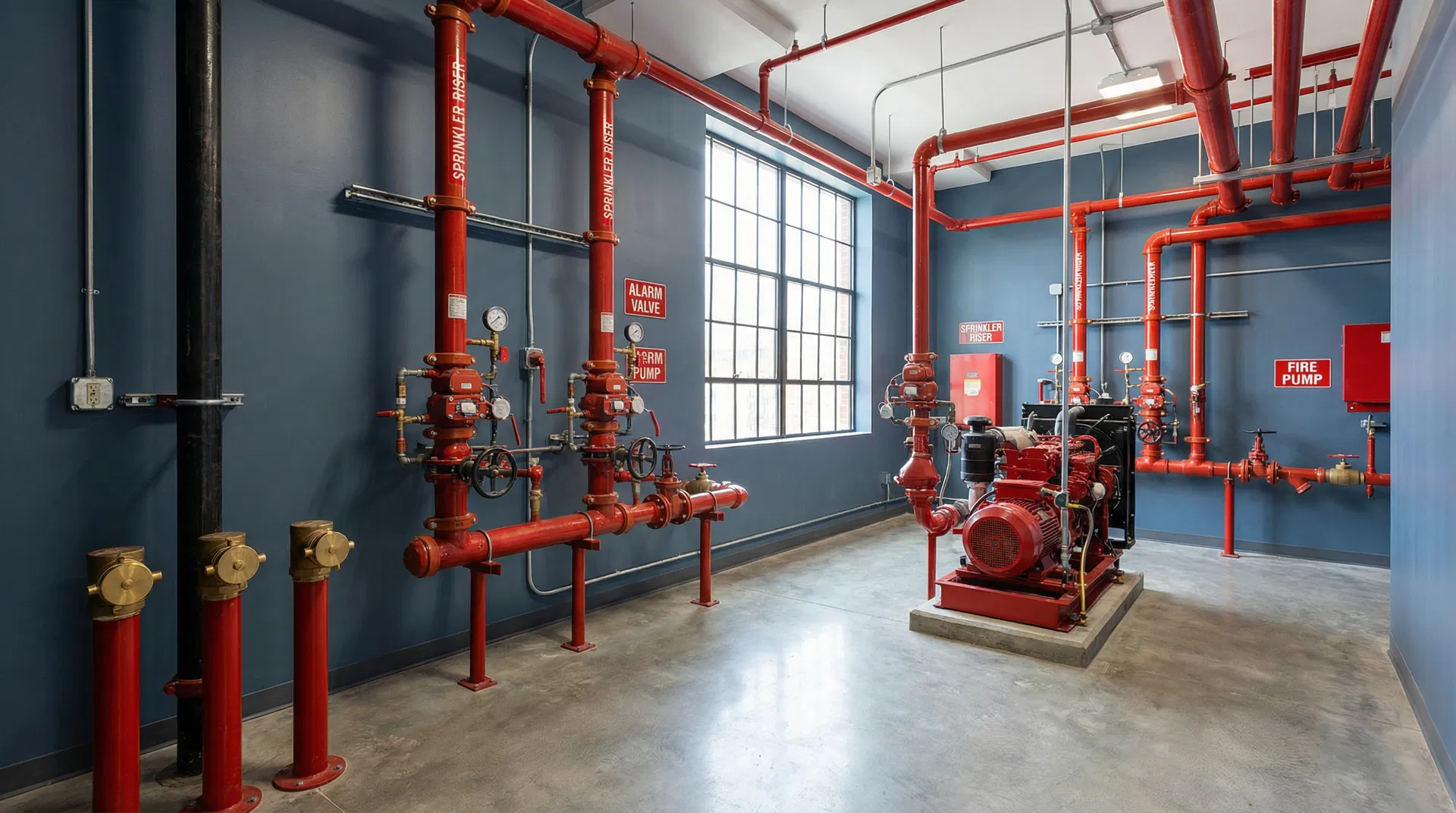
Comprehensive fire protection engineering including automatic sprinkler systems, special suppression systems, standpipe systems, and fire pump design.
Automatic Sprinkler Systems
Automatic sprinkler systems are the most effective and reliable means of controlling and extinguishing fires in buildings, and EBS Engineering PC designs these systems to the highest standards of safety and performance. Our fire protection engineers have extensive experience designing sprinkler systems for every building type and occupancy classification, from light hazard office buildings to extra hazard industrial and storage facilities.
Wet Pipe Systems: The most common and reliable type of sprinkler system, wet pipe systems maintain water under pressure in the piping at all times, providing immediate discharge when a sprinkler head activates. We design wet pipe systems for all heated spaces where there is no risk of pipe freezing, sizing mains, cross-mains, and branch lines using hydraulic calculations to ensure adequate water flow and pressure at the most remote and most demanding sprinkler heads.
Dry Pipe Systems: For unheated spaces such as parking garages, loading docks, attics, and freezer warehouses where wet pipe systems would be subject to freezing, we design dry pipe systems that maintain pressurized air or nitrogen in the piping. When a sprinkler head activates, the air pressure drops, opening the dry pipe valve and allowing water to flow into the piping and discharge from the activated sprinkler. Our dry pipe designs account for the additional water delivery time and include properly sized accelerators or exhausters to minimize the delay.
Pre-Action Systems: Pre-action systems provide an additional level of protection against accidental discharge, making them ideal for environments with high-value or water-sensitive contents such as data centers, museums, archives, and telecommunications facilities. We design both single-interlock and double-interlock pre-action systems that require activation of a separate detection system before water is admitted to the sprinkler piping, significantly reducing the risk of water damage from mechanical damage to sprinkler heads or piping.
Deluge Systems: For high-hazard applications where rapid fire spread is a concern, such as aircraft hangars, chemical storage areas, and transformer vaults, we design deluge systems with open sprinkler heads that simultaneously discharge water over the entire protected area when activated by a detection system. Our deluge designs include careful hydraulic analysis to ensure adequate water supply for the high simultaneous flow demands of these systems.
Special Suppression Systems
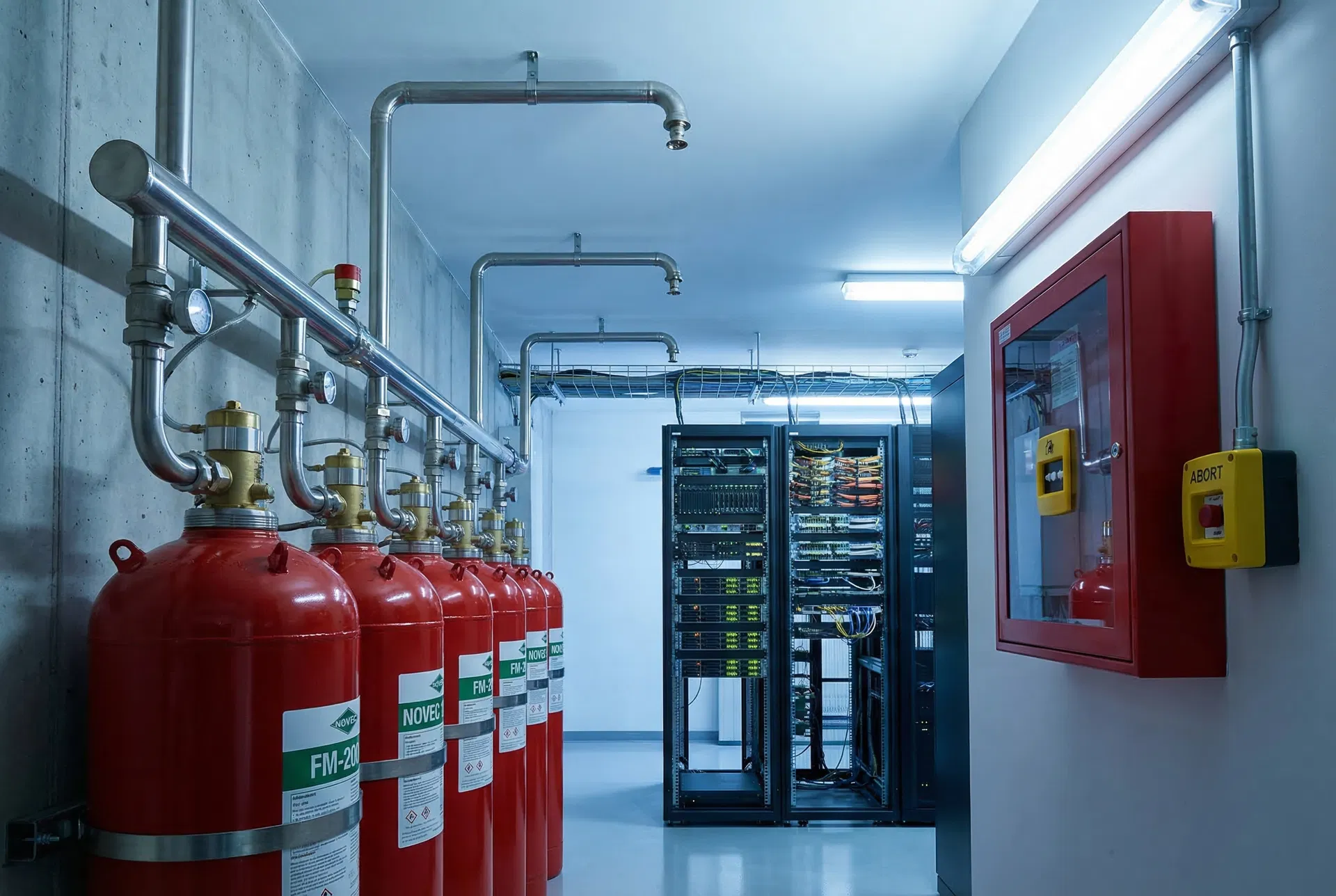
Not all fire hazards can be effectively addressed with water-based sprinkler systems. EBS Engineering PC designs a range of special suppression systems for applications where water would be ineffective, damaging, or inappropriate.
Clean Agent Systems: For the protection of sensitive electronic equipment, data centers, server rooms, telecommunications facilities, and other spaces where water damage would be catastrophic, we design clean agent fire suppression systems using agents such as FM-200 (HFC-227ea), Novec 1230, and inert gas blends (IG-541, IG-55). These agents extinguish fires without leaving residue and are safe for use in occupied spaces at design concentrations. Our clean agent designs address room integrity requirements, agent quantity calculations, discharge nozzle placement, detection and control panel design, and abort switch provisions.
Foam Suppression Systems: For flammable liquid hazards such as fuel storage areas, loading docks, and industrial processes involving combustible liquids, we design foam suppression systems that blanket the liquid surface to prevent vapor release and extinguish the fire. We select the appropriate foam concentrate type (AFFF, AR-AFFF, or fluorine-free foam) based on the specific hazard and environmental considerations.
Carbon Dioxide (CO2) Systems: For specific industrial applications such as paint spray booths, printing presses, and engine test cells, we design total flooding or local application CO2 suppression systems. Due to the life safety concerns associated with CO2 discharge in occupied spaces, our designs include comprehensive safety features including pre-discharge alarms, time delays, lockout provisions, and post-discharge ventilation.
Standpipe Systems & Fire Pumps
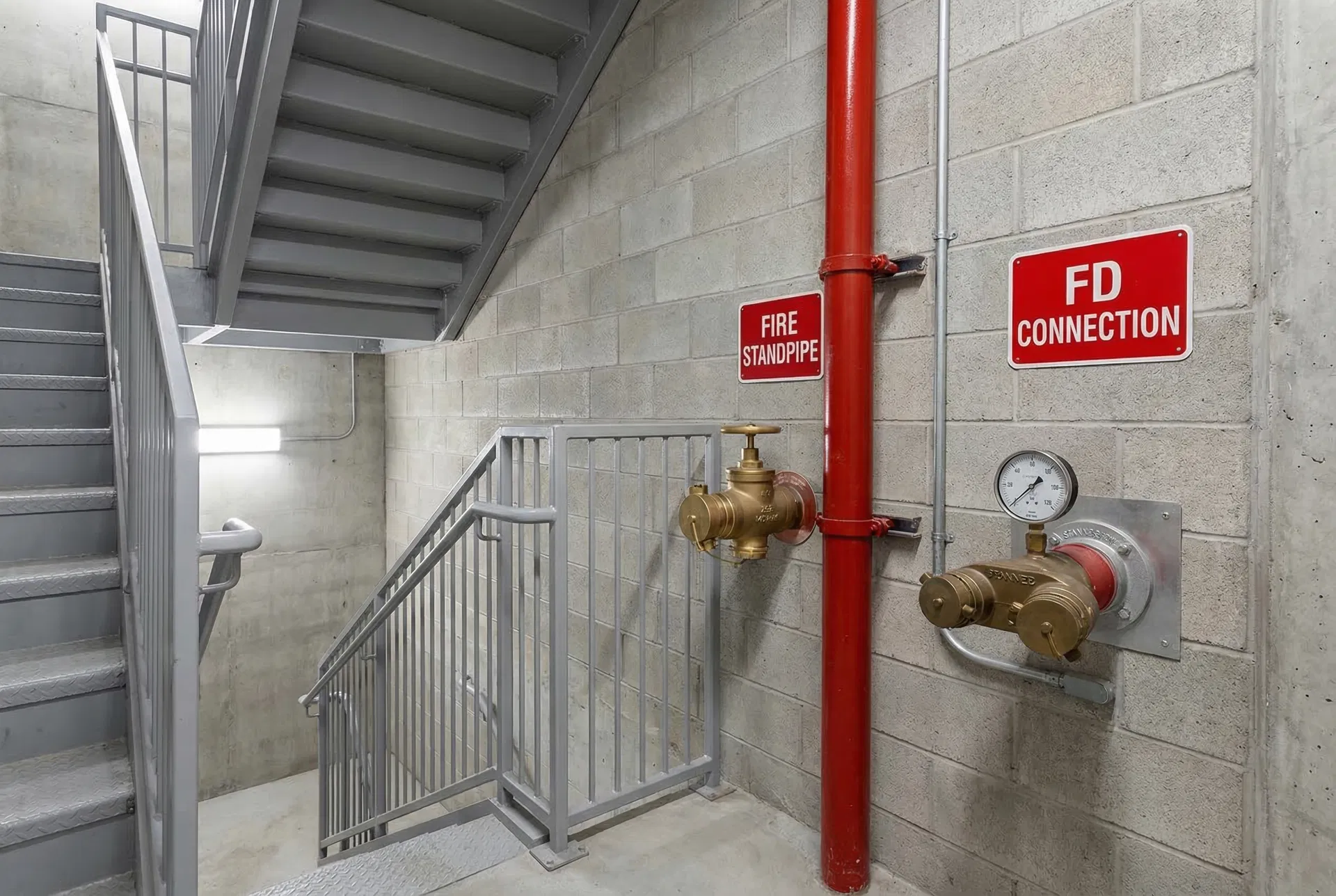
Standpipe systems provide a means for firefighters to connect hoses and deliver water to upper floors and remote areas of buildings where the reach of exterior hose streams is limited. EBS Engineering PC designs standpipe systems in accordance with NFPA 14 (Standard for the Installation of Standpipe and Hose Systems) for all buildings where they are required by the building code or where they are voluntarily provided for enhanced fire protection.
We design Class I standpipe systems with 2-1/2 inch hose connections for firefighter use, Class II systems with 1-1/2 inch hose connections for building occupant use, and Class III combined systems. Our designs include properly located hose connections in stairwells, at building entrances, and in other locations required by code, as well as fire department connections (FDCs) that allow firefighters to supplement the building's water supply from their apparatus.
Fire Pump Design: When the available municipal water pressure is insufficient to meet the flow and pressure demands of the sprinkler and standpipe systems, we design fire pump systems to boost the water supply. Our fire pump designs include the selection of the appropriate pump type (horizontal split-case, vertical in-line, or vertical turbine), driver type (electric motor or diesel engine), and capacity based on the system demand calculations. We design complete fire pump rooms with the pump, driver, controller, jockey pump, test header, and all associated piping and valves in accordance with NFPA 20 (Standard for the Installation of Stationary Pumps for Fire Protection).
Our fire pump designs include detailed hydraulic calculations that account for the pump's performance curve, suction conditions, and the system demand curve to ensure reliable operation under all anticipated conditions. We coordinate with the electrical engineer to ensure adequate and reliable power supply to electric fire pumps, including provisions for emergency power where required by code.
Building Condition Assessment
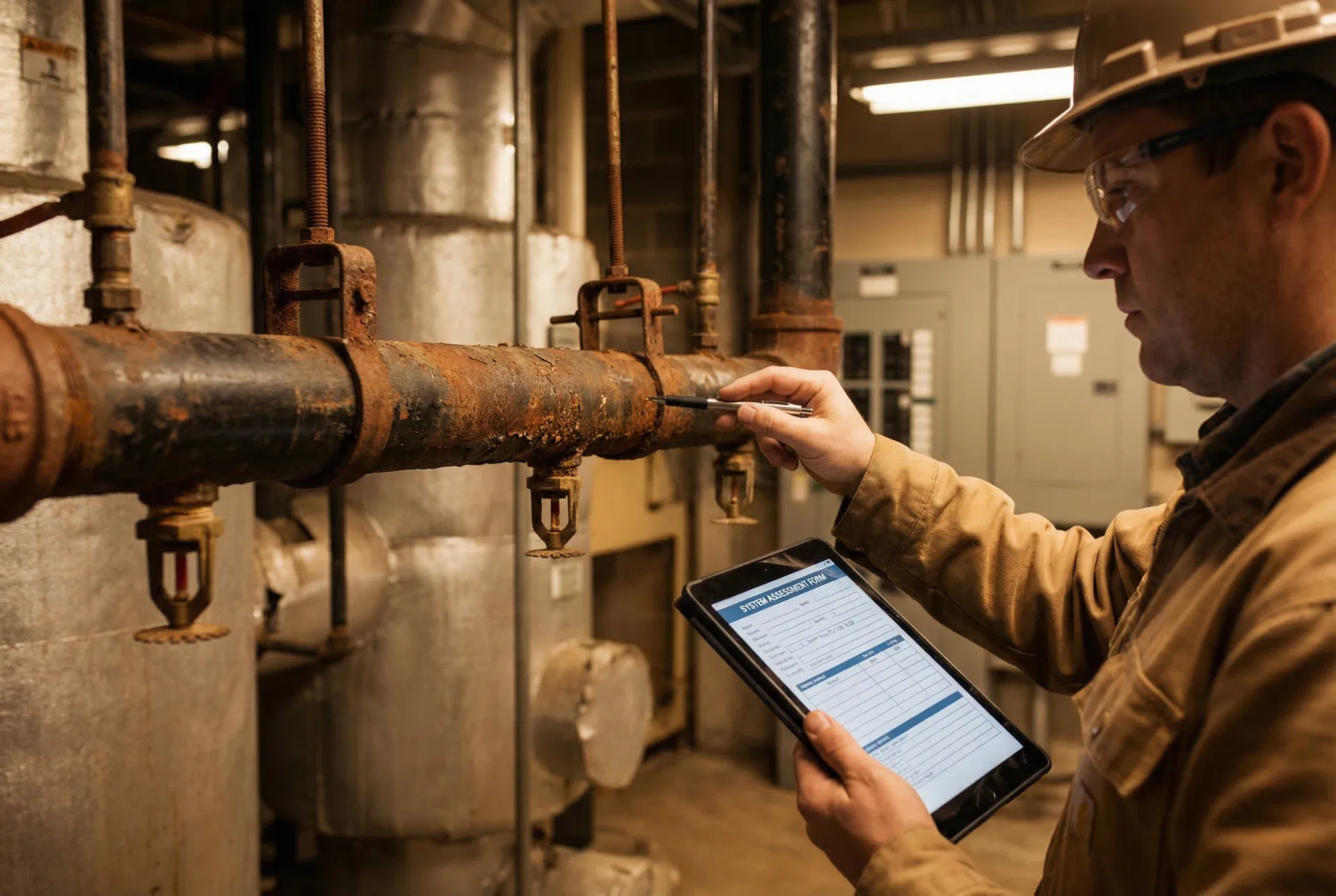
For existing buildings, EBS Engineering PC performs fire protection system condition assessments to evaluate the current state of sprinkler systems, standpipe systems, fire pumps, and related equipment. Our assessments help building owners understand system condition, identify aging infrastructure, and develop upgrade strategies to maintain code compliance and system reliability.
During a condition assessment, we visually inspect sprinkler system piping, valves, and heads; standpipe systems and hose connections; fire pump equipment; and control valves and monitoring devices. We document system age, apparent condition, and any visible signs of corrosion, leaks, or deterioration. We review system design documents, inspection and maintenance records, and identify any deferred maintenance items or code compliance issues.
We assess system capacity to support current building occupancy and use, and identify any deficiencies relative to current code requirements. We identify aging components approaching end of life and provide recommendations for replacement timing and technology improvements. For systems requiring upgrades or modifications, we provide preliminary scope and budget guidance to support capital planning and strategic decision-making.
Code Compliance & Standards
All fire protection engineering designs by EBS Engineering PC are developed in strict compliance with applicable codes, standards, and guidelines. Our thorough understanding of the fire protection regulatory landscape ensures that every system we design meets or exceeds the requirements of the Authority Having Jurisdiction (AHJ), insurance carriers, and property loss prevention standards.
Primary Codes & Standards
- •NFPA 13 — Standard for the Installation of Sprinkler Systems
- •NFPA 13R — Sprinkler Systems in Low-Rise Residential Occupancies
- •NFPA 14 — Standard for the Installation of Standpipe and Hose Systems
- •NFPA 20 — Standard for the Installation of Stationary Pumps for Fire Protection
- •NFPA 2001 — Standard on Clean Agent Fire Extinguishing Systems
- •NFPA 750 — Standard on Water Mist Fire Protection Systems
Building & Insurance Standards
- •International Building Code (IBC) — Building fire protection requirements
- •International Fire Code (IFC) — Fire prevention and life safety
- •NYS Fire Code — New York State specific fire protection requirements
- •FM Global Data Sheets — Property loss prevention standards
- •Local AHJ Requirements — Jurisdiction-specific amendments and water supply requirements
Our engineers maintain current knowledge of NFPA code cycles and participate in continuing education to stay abreast of evolving fire protection technology and regulatory requirements. We coordinate closely with the AHJ and fire marshals during the design phase to address any jurisdiction-specific requirements and facilitate a smooth permitting and inspection process.
Explore Our Other Services
Comprehensive MEP engineering solutions for every project need